View Easements in Seattle: What Home Buyers Should Know
What is a view easement in Seattle real estate?
A view easement (or view covenant) is a recorded restriction that limits building and vegetation height on part of one Seattle property so a neighboring property’s view stays protected. It runs with the land, usually forever, and is enforceable in court, so buyers looking at a home with one on title need to know exactly which part of the lot it covers before they worry about their landscaping plans.
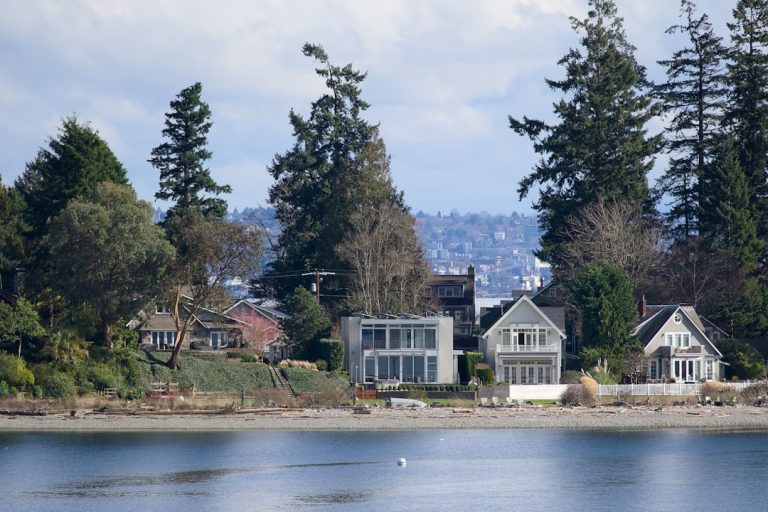
This week, I was working on a home sale in the Leschi neighborhood – with great views of Lake Washington. As my clients and I viewed the property records – we saw that there were “CC&R’s” enacted between the home owner and the neighbor, restricting what could be planted or built on our lot… in order to keep the view of the lake clear for both homes.
This type of concern usually comes up during due diligence when we are doing the title review. The buyer may call and say, “There’s something called a view easement on the title report. What does that mean for us?”
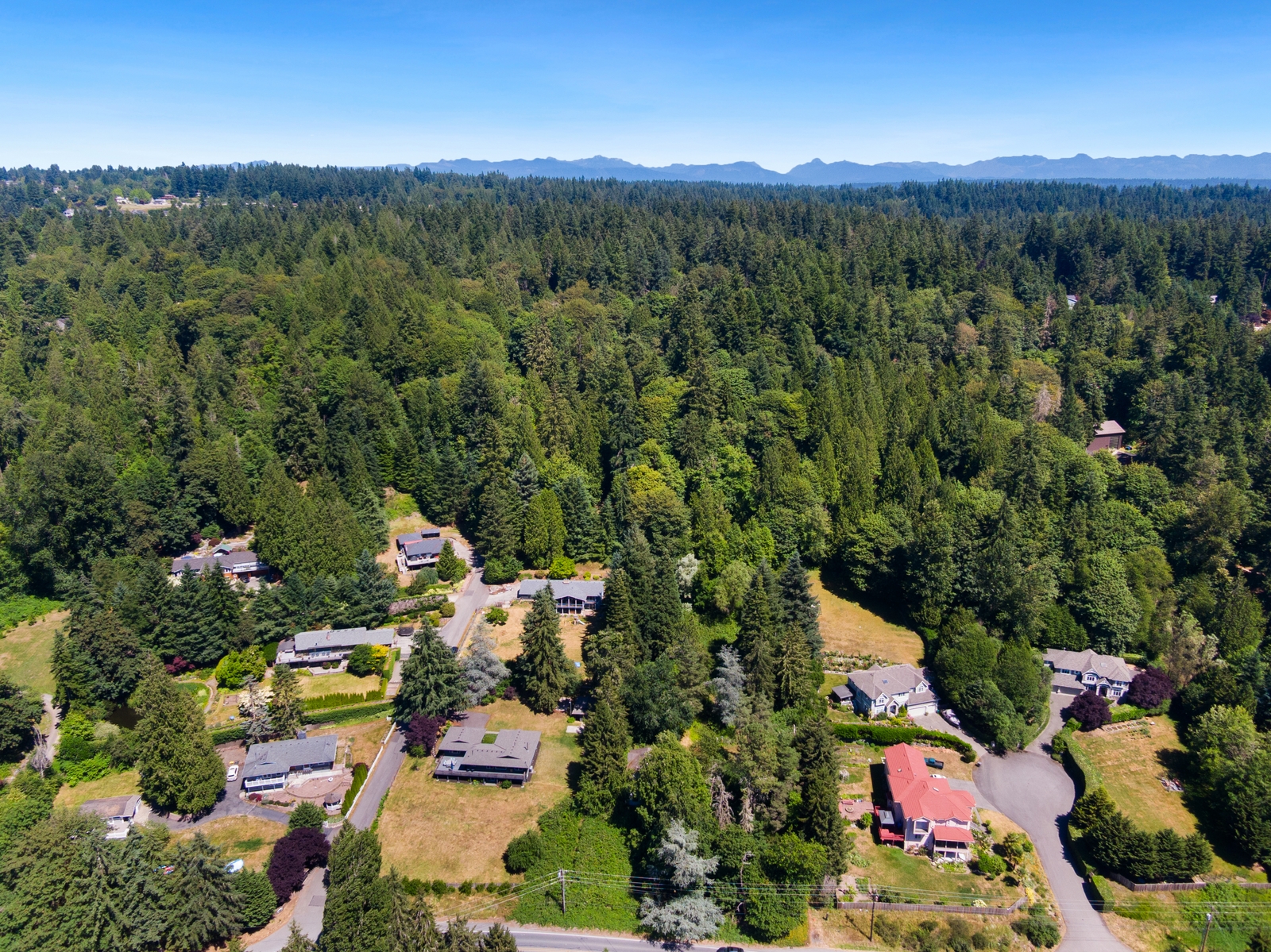
If you’re house hunting anywhere on Seattle’s hills, in the neighborhoods that look down on Lake Washington, Puget Sound, or up to Mount Rainier, you are going to run into these documents sooner or later. I’ve been in real estate since 2002, and in the neighborhoods I work most, Lake Forest Park, Kenmore, Shoreline, and the north end more broadly, view protection covenants show up often enough that I walk buyers through one nearly every quarter. They also show up constantly in Leschi, Madrona, Mount Baker, Magnolia, and Queen Anne, the classic hillside neighborhoods where the view is a huge part of what you’re paying for.
So let’s talk about what a view easement actually is, what it does and doesn’t restrict, and how to think through it clearly instead of anxiously. It is exactly the kind of title detail that comes up during the home buying process, so it helps to know what to expect before you are staring at a title report under contract.
Why view easements are so common on Seattle’s hills
Seattle’s topography is the whole reason this matters here in a way it doesn’t in flatter markets. Water on multiple sides, dramatic elevation changes, and mature tree canopy mean a view that exists today can disappear in five years if a neighbor plants a row of Leyland cypress or adds a second story. When a view adds real dollars to a sale price, which it absolutely does on the hills I work, both buyers and sellers have an incentive to lock that value in with something more durable than a handshake.
That’s why you’ll find these covenants scattered through King County property records going back decades, often created at the exact moment a large hillside lot was subdivided into two parcels. One owner keeps the upper or better-situated lot with the view. The other buys the lower lot at a price that reflects the restriction, and the restriction gets recorded to run with the land forever, surviving every future sale.
Have questions about a view easement or title exception on a specific property? Text HOME to 206-245-8813 and I’ll reach out to help you make sense of it.
Where you’ll find a view easement, and why the wording matters
View easements typically surface in the preliminary title report, in Schedule B, listed as a special exception alongside things like utility easements and old plat restrictions. They’re sometimes labeled “view easement,” but just as often you’ll see language like “declaration of covenants and restrictions” or “restrictive covenant limiting height of vegetation.” The word “easement” doesn’t have to appear at all for the restriction to be fully enforceable.
What I tell every buyer: read the actual document, not just the one-line reference on the title report. If you ever want to pull a recorded document yourself, the King County Recorder’s Office online records search lets you look up anything recorded against a property by parcel number or party name. The details that matter are:
- Which portion of the lot is restricted. This is the detail people skip, and it’s the most important one. Many view covenants don’t restrict the entire yard. They apply to a specific strip described by metes and bounds, often a narrow band along one property line where the view corridor actually runs. I’ve reviewed easements that cover the whole lot and others that cover a fifteen-foot-deep strip along a single side yard. Those are very different situations for the same three words, “view easement,” on a title report.
- The height limit and what it applies to. Most of these restrict both structures and vegetation, often to the same number, five or six feet is typical, measured from a specific reference point (ground level, the highest point on the lot, or a surveyed elevation).
- Who can enforce it, and what happens if it’s violated. Most covenants give the benefited property owner the right to go to court for an injunction, and many include a clause that makes the losing side pay the winning side’s attorney’s fees. That fee-shifting language is worth noticing, because it raises the cost of ever testing the boundary informally with a neighbor.
- Whether it runs in perpetuity or has an end date. Most are written to last forever, terminable only by written agreement between the current owners of both lots.

A recent example (details changed)
I was recently working with buyers on a home in the two million dollar range on one of Seattle’s view hills. The title report showed a view easement, and their first read of it was understandably worried: “the neighbor has veto power over our yard, nothing over five feet can be built or planted, what does this mean for resale?”
When we actually pulled the recorded document, a few things became clear. First, the restriction applied to a defined strip of the lot, not the entire yard, so their existing landscaping (lawn, roses, a small ornamental tree) sat outside the restricted area entirely. Second, the practical questions they had, could they put up a patio umbrella, could they add a paver patio, came down to reading the specific language of “improvement” in that document rather than assuming the worst. I referred them to Galvin Realty Law Group to get a definitive read on those specifics, which is exactly the right move any time the language is ambiguous and money is on the line. I’m also checking in with our title company, Fidelity National Title, to make sure nothing about the underlying recorded easement has changed since it was originally established.
The lesson generalizes well beyond that one house: don’t let three words on a title report (“view easement” or “view covenant”) do all the emotional work. Get the actual recorded document, and if possible, get a survey that overlays the restricted area onto the lot so you can see in feet and inches what it actually touches.
Does a view easement hurt resale value?
This is the question that actually keeps people up at night, and the answer depends on which side of the easement you’re on, and how well-defined the restriction is.
If your property is the one benefited by the easement, meaning a neighbor’s lot is restricted to protect your view, that’s generally a value-add. You’ve got a legal guarantee, not just a hope, that your view survives the next remodel or landscaping project next door.
If your property is the one burdened by the easement, meaning you’re the one who can’t build tall or plant tall in that defined area, the effect on value is usually smaller than people fear, for a few reasons:
- Buyers at this price point expect it. In neighborhoods where views drive pricing, sophisticated buyers and their agents already know these covenants are part of the territory. A well-documented, narrow, clearly surveyed restriction reads as a known quantity, not a red flag.
- A narrow strip restriction rarely limits what most buyers actually want to do. If the restricted area doesn’t overlap with where someone wants a deck, a garden bed, or a play structure, it has almost no practical effect on day-to-day enjoyment of the home.
- What actually damages resale value is uncertainty, not restriction. A vague, undocumented, or hard-to-locate view easement creates more hesitation in buyers than one with a clean survey and a plain-English explanation ready to go. If you’re selling a home with one of these on title, having that survey and a simple one-page summary prepared in advance is one of the more useful things you can do before you list.
What to do if you’re buying a home with a view easement
If you’re under contract or considering an offer on a home with a recorded view easement, here’s the sequence I walk buyers through. It fits into the same title and contingency review period where you’re already checking things like earnest money terms and inspection results, so it doesn’t have to feel like a separate project.
- Pull the full recorded document, not just the title report summary. Your agent or title company can get you the complete recording.
- Identify exactly which portion of the lot is restricted. Look for a legal description by metes and bounds, or a reference to an exhibit map. If it’s unclear, a licensed surveyor can plot it.
- Compare the restricted area to your actual plans. Where do you want to landscape, build, or add hardscape? Does it overlap with the restricted strip at all?
- Get specific language questions answered by a real estate attorney, especially anything involving “improvement,” permanent versus temporary structures, or how height is measured. This is not a place to guess.
- Ask who currently benefits from the easement, and whether that neighbor has ever raised concerns about the boundary. Your agent can often find this out through a simple conversation before closing.
What to do if you’re selling a home with a view easement
If you’re the one listing a property with a view easement on title, get ahead of it:
- Have the recorded document ready to hand to buyers’ agents at showings, not something they have to dig for.
- Consider a survey overlay in advance so you can show, in plain terms, exactly where the restriction applies relative to the yard.
- Be ready to answer the resale question directly. Buyers who feel like they’re getting clear information move forward with confidence. Buyers who feel like they’re uncovering a mystery slow down or walk.
Frequently Asked Questions
What is a view easement in Seattle real estate?
A view easement is a recorded legal restriction that limits building height and vegetation height on part of one property so that a neighboring property’s view stays protected. It runs with the land and typically lasts in perpetuity.
Is a view easement the same as an HOA view rule?
No. A view easement is typically a private agreement between two specific neighboring lots, recorded against the title. An HOA view protection clause comes from a community’s CC&Rs and can apply more broadly across a development, with enforcement handled by the HOA rather than an individual neighbor.
Can a view easement cover my entire yard?
It can, but many are written to cover only a specific portion of the lot, described by exact measurements. Always request the full recorded document to see the described area rather than assuming it applies everywhere.
Do view easements affect home value in Seattle?
Generally, a well-documented, narrow view easement has a modest effect on value, especially in neighborhoods where views drive pricing and buyers expect this kind of protection to exist. Vague or poorly documented restrictions create more buyer hesitation than clearly surveyed ones.
Who enforces a view easement?
Typically the owner of the benefited property, through court action if necessary. Many recorded declarations include a clause requiring the losing party in any dispute to pay the other side’s attorney’s fees, which is worth knowing before any informal disagreement with a neighbor escalates.
Ready to talk through what a view easement means for your situation? Text HOME to 206-245-8813 and I’ll reach out to set up a conversation, no pressure, just a straightforward look at your options.
Or visit the Buyer Document Review page to see how title and contract review fits into the buying process.

About the Author: Emily Cressey
Emily Cressey is a Seattle-area buyer’s agent and REALTOR® with HomePro Associates at Keller Williams Greater Seattle, specializing in relocation, first-time buyers, buy-sell transactions, downsizers, and new construction purchases across King and Snohomish Counties. A real estate investor since 2002 and a licensed broker since 2008, she grew up in Shoreline, WA and has guided buyers through every kind of market to help them find a home they love that will be a profitable long-term investment. Emily says, “My goal is to educate buyers so they make confident decisions.”
If you’re thinking about a move, reach out to Emily here. Call or text 206-245-8813 . We make real estate EASY for you.
WA Real Estate License #20109399 · Verify at WA DOL