Best Places to Live in Magnolia for a Short Commute to Campus
What part of Magnolia gives the shortest commute to campus? Homes near the eastern and southern edges of Magnolia, around the Village corridor and W McGraw Street, put Seattle Pacific University within 10-20 minutes and the University of Washington within 30-40 minutes depending on traffic.
Magnolia keeps coming up on Seattle neighborhood lists for good reason. Puget Sound views. Quiet streets. Single-family homes with actual yards. A pace that feels different from the rest of the city even though you’re technically inside it.
But Magnolia also has a reputation. Anyone who’s lived here, or tried to leave at 8 a.m. on a Tuesday, knows what it is: one of Seattle’s most isolated neighborhoods, served by a limited set of access routes that all funnel through the same congested corridor before you reach a main arterial.
For someone whose daily life involves a campus commute, that matters. The good news is that some of Magnolia’s proximity advantages are underappreciated, particularly if Seattle Pacific University is your destination. The key is knowing which part of the neighborhood you’re in and which direction you’re heading.
This post walks through the honest version of what campus commuting from Magnolia looks like, including the trade-offs that don’t always make it into the highlight reel.
What Makes Magnolia Different from the Rest of Seattle
Magnolia sits on a bluff peninsula in northwest Seattle. Puget Sound to the west, the Lake Washington Ship Canal to the south, and the Interbay corridor to the east. It’s not connected to the rest of the city the way most neighborhoods are. You get in and out through a small number of routes, and when something disrupts one of them, the alternatives fill up fast.
The main access points into and out of Magnolia:
- W Government Way through Interbay: the primary route east toward downtown and the rest of Seattle
- W McGraw Street: the southern residential connection toward Queen Anne
- Thorndyke Avenue W: the northern route toward Interbay, Ballard, and Fremont
There is no light rail station in Magnolia. Bus service exists but is limited relative to most Seattle neighborhoods. For a campus commute, you’re almost certainly driving at least part of the way, and probably all of it.
The bluff geography also means Magnolia isn’t one uniform neighborhood. The hilltop areas have the dramatic views and the larger homes. The lower areas near the commercial strip on W McGraw and around the Village are quieter and more practical for daily errands. These distinctions matter when you’re evaluating commute time, because your exit route depends significantly on where in Magnolia you actually are.
The Campuses Worth Mapping From Magnolia
Before evaluating neighborhoods, it helps to be clear about where you’re going. Here are the campuses that come up most often for Magnolia residents.
Seattle Pacific University (SPU)
SPU sits at the base of Queen Anne Hill, right at the west end of the Fremont Bridge. From most of Magnolia, that’s about 2-4 miles. At 8 a.m. on a weekday, plan on 10-20 minutes depending on which exit route you take.
This is the closest major university campus to Magnolia by a wide margin. If SPU is your destination, Magnolia is genuinely well-situated by Seattle standards.
University of Washington (UW)
The UW main campus is in the University District, roughly 8-10 miles from Magnolia. The route takes you through or around downtown, and traffic through the Mercer Street corridor or across the Aurora Bridge is unpredictable.
Realistic weekday morning times: 30-45 minutes. Heavier traffic days can push past 50 minutes. The U District is also served by Link Light Rail, so one option is to drive to a park-and-ride and take the train from there, though total commute time ends up similar.
Seattle Central College
Located in Capitol Hill, about 6-8 miles from Magnolia. The route goes through downtown or along Eastlake. Expect 25-40 minutes during morning commute hours.
Commute Time Overview
| Campus | Distance from Magnolia | Off-Peak Drive | Rush Hour Drive |
|---|---|---|---|
| Seattle Pacific University | 2-4 miles | 8-15 min | 15-25 min |
| University of Washington | 8-10 miles | 20-25 min | 35-50 min |
| Seattle Central College | 6-8 miles | 18-22 min | 30-45 min |
| North Seattle College | 8-10 miles | 18-25 min | 30-45 min |
Estimates based on typical Seattle traffic patterns. Actual times vary by specific address and departure time. Test your exact commute window before committing to a neighborhood.
The Different Parts of Magnolia and What They Mean for Your Commute
Magnolia is not one uniform neighborhood. Where you live on the peninsula affects your commute in real ways.
The Village Area (Around W McGraw St and 32nd Ave W)
The commercial heart of Magnolia: the grocery store, local cafes, a handful of restaurants. This is also the part of Magnolia closest to the W McGraw Street exit toward Queen Anne, which gives you a relatively direct southern route out of the neighborhood.
From here, SPU is typically under 20 minutes. UW is closer to 35-40 minutes on a standard weekday morning. This area has a mix of older bungalows, mid-century homes, and newer construction at various price points.
The Bluff (Upper Magnolia)
Homes along W Galer, W Raye, and the western-facing bluff offer some of the best views in all of Seattle: Puget Sound, the Olympic Mountains, the downtown skyline on clear days. These are also the properties that require the longest exit once you’re heading to work.
The added time is usually 5-15 minutes over Village-area homes, depending on your exact address and the route you take. If you’re leaving before 7:15 a.m. or after 9:00 a.m., you’ll barely notice it. During the heart of rush hour, it adds up.
These tend to be the highest-demand homes in Magnolia, and the prices reflect that.
The Thorndyke Corridor (Northern Lower Magnolia)
The northern and lower sections along Thorndyke Avenue W give you an alternate exit: north through Interbay toward Ballard and Fremont. If your campus is north of downtown (SPU, for instance, or employers in Fremont), this routing can work in your favor and avoids some of the downtown-direction congestion.
These streets also tend to have more accessible price points for buyers entering the Magnolia market.
The Access Reality: What to Know Before You Commit
This is the part of the Magnolia conversation that sometimes gets glossed over until after someone signs a purchase agreement.
Magnolia’s entry and exit options are limited. A few bottleneck routes serve the entire peninsula, and when something disrupts one of them (road construction, an accident, storm damage to the bluff), the alternatives get crowded quickly. The western bluff has documented erosion issues, and Magnolia’s infrastructure has been a subject of city planning discussions for years. Before purchasing in Magnolia, it’s worth asking about the current condition of your specific routes and any projects that might affect access.
For a campus commuter, the practical takeaway is this: build buffer into your schedule. A 20-minute normal commute can become 45 minutes if you catch a bad window. That’s true in many Seattle neighborhoods, but Magnolia’s limited exits make the neighborhood less forgiving than most when something goes wrong.
The most common adaptation from experienced Magnolia residents: leave early. Magnolia before 7:00 a.m. is genuinely different from Magnolia at 8:15 a.m.
If you want to understand more about what slope and bluff conditions mean for specific properties, ask your agent about a geotechnical report before making an offer on a bluff-adjacent property.
What the Housing Market Looks Like in Magnolia
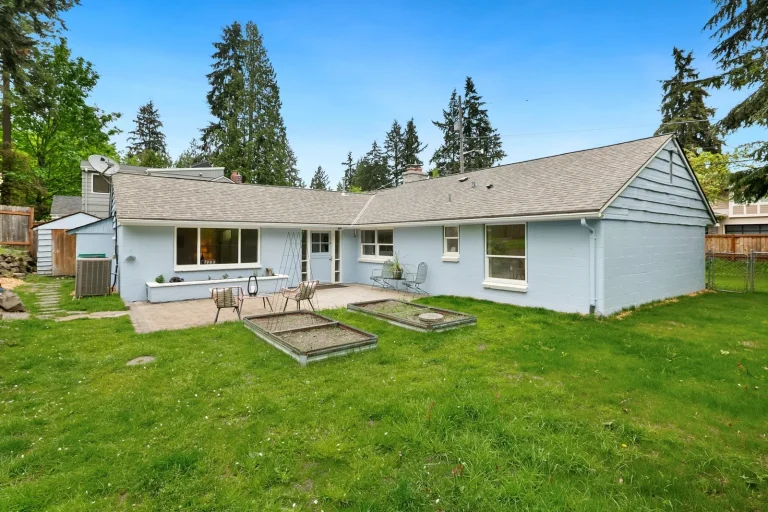
Magnolia is primarily a single-family neighborhood. You won’t find the density of condos or micro-apartments you see in Capitol Hill or South Lake Union. Most of what’s available is houses, ranging from modest mid-century ranches to larger updated view homes on good-sized lots.
A few things to understand as a buyer:
View premium. In Magnolia, properties with water and mountain views carry a real premium over otherwise similar homes without them. That price gap is wide. If you’re working with a fixed budget, knowing whether you’re prioritizing the view or the commute practicality helps narrow your search early.
Older housing stock. Many of Magnolia’s homes were built between the 1930s and 1970s. That means character, original details, and often meaningful lot sizes. It also means older wiring, original plumbing, and potential deferred maintenance. A thorough inspection matters here.
Bluff proximity. Some Magnolia lots sit close to the western bluff. Before making an offer on a bluff-adjacent property, ask whether any geotechnical reports have been prepared for the site. The city has required these for some properties in the area. It’s not a reason to walk away automatically; it is a question worth asking before you’re in contract.
For a broader look at what homeownership in this price range and neighborhood type actually costs beyond the purchase price, buyers should budget for the due diligence gaps common to this neighborhood: inspection contingencies, potential geotech review, and updates to older systems.
And for a comparison on how similar neighborhoods nearby play out for buyers, see Best Places to Live in Lake Forest Park for a Short Commute to the Hospital for how another Seattle-area neighborhood handles the same trade-offs.
For Magnolia listings currently on the market, you can browse and filter by price, size, and features at HomeProHouses.com.
Transit Options If You’re Hoping to Avoid Driving
Magnolia is not one of Seattle’s more transit-rich neighborhoods. That’s a real consideration if you want to leave the car at home.
King County Metro buses: Route 24 and Route 33 connect Magnolia to downtown Seattle. From downtown you can transfer to Link Light Rail for destinations like the University District, Capitol Hill, and Westlake. Total commute time to UW by this method: roughly 50-75 minutes depending on timing and waits. SPU is accessible but slower by bus than by car.
Biking: Parts of Magnolia are bikeable, particularly the flatter areas near the Village. The exit routes through Interbay are manageable for experienced cyclists, though the hills, limited protected infrastructure, and weather make it a harder choice for most daily commuters. Magnolia is not a “just hop on a bike” neighborhood the way Wallingford or Fremont are.
Park and ride: A number of Magnolia residents drive to a park-and-ride in Interbay or nearby, then take transit from there. This reduces time on the road and avoids downtown parking costs while keeping the overall commute reasonable.
Honest assessment: if you’re commuting to SPU, driving is the clear and easy choice. If you’re heading to UW and want to avoid driving entirely, Magnolia is probably not your best option compared to neighborhoods with closer proximity to the U District and light rail.
Is Magnolia Worth It for a Campus Commuter?
That depends on what else you’re optimizing for.
Magnolia offers something hard to find inside Seattle city limits: a neighborhood that feels separate from the city’s density while still being 15-20 minutes from downtown. The housing stock leans toward single-family homes with real yards. The streets are quiet. Discovery Park, the largest park in Seattle at 534 acres, is right here. The views, where they exist, are among the best in Seattle.
For SPU commuters, Magnolia is one of the better-positioned neighborhoods you can choose. You get a tucked-away residential feel with a commute that’s manageable on most days.
For UW commuters, it’s a harder trade-off. The drive is doable but not short, and you’re paying a Magnolia premium for a longer commute than you’d have from Ravenna, Wallingford, or Green Lake. Whether that premium makes sense depends entirely on whether Magnolia’s specific character matters to you: the quiet, the space, the views, the sense of being slightly removed from everything.
Neither answer is wrong. It’s just about knowing which variables matter most before you commit.
5 Things to Know Before Buying in Magnolia as a Campus Commuter
- Test your actual commute window. Drive it twice: once at a normal time and once at your actual departure time. Magnolia’s access issues show up most during that specific 7:30-8:30 a.m. window.
- Understand bluff proximity before you offer. Not every Magnolia property carries the same geological risk, but the neighborhood has a documented history of slope issues on the western face. Ask specific questions. Request any geotechnical reports that exist for the property.
- Plan around having a car. Transit from Magnolia exists, but it’s not a replacement for driving for most campus commute scenarios. Build your daily logistics around having reliable car access.
- Know which part of Magnolia you’re targeting. Village-area and southern Magnolia homes save you meaningful commute time over upper bluff properties. Decide early whether the view or the commute time matters more to you.
- Work with someone who knows the neighborhood’s access dynamics. A general Seattle agent may not flag which streets complicate a morning exit or which routes get worst during outages. Local knowledge matters here more than in most Seattle neighborhoods.
Frequently Asked Questions About Commuting from Magnolia to Campus
How long does it take to drive from Magnolia to the University of Washington?
From most Magnolia addresses, plan on 30-45 minutes during weekday morning rush hour. Off-peak the same drive can take 20-25 minutes. There is no direct transit route, but combining a bus to downtown and then Link Light Rail to the U District is possible in roughly 55-75 minutes total, depending on timing and waits.
Is there public transit from Magnolia that connects to university campuses?
Yes, King County Metro Routes 24 and 33 serve Magnolia with connections to downtown Seattle. From downtown you can reach Link Light Rail for destinations including the University District, Capitol Hill, and South Lake Union. For Seattle Pacific University specifically, driving is significantly faster than transit for most Magnolia addresses. Bus service is useful for downtown-adjacent destinations, less so for SPU.
What is the access situation like getting in and out of Magnolia?
Magnolia is a peninsula neighborhood with a limited number of entry and exit routes through the Interbay corridor and via W McGraw Street. These routes can back up during weekday commute windows. Residents who have lived here learn to adjust their departure time or leave early to avoid the worst of it. Before purchasing, test your specific commute at your actual departure time on a few different days.
How do home prices in Magnolia compare to other Seattle neighborhoods?
Magnolia carries a premium, especially for view properties. Entry-level homes exist in the neighborhood, particularly older homes without Sound views or on lower-demand streets. Compared to Queen Anne or Ballard, prices are broadly similar, though Magnolia skews heavily toward single-family homes with fewer low-price-point options like studios or small condos.
What makes Magnolia unique compared to other Seattle neighborhoods?
Magnolia is one of Seattle’s most distinct neighborhoods: a bluff peninsula with Puget Sound views, Discovery Park, a quiet residential character, and a stronger sense of separation from the city than almost any other in-city neighborhood. That separation is both its appeal and its trade-off. You gain quiet and space; you give up easy transit access and face limited exit routes. For buyers who specifically want what Magnolia offers, there’s no real substitute inside Seattle.
For the full neighborhood overview, see my Magnolia neighborhood guide.

About the Author: Emily Cressey
Emily Cressey is a REALTOR®, Broker, and Team Lead at HomePro Associates, affiliated with Keller Williams Greater Seattle. She has served buyers, sellers, and investors throughout King and Snohomish counties for over 20 years, specializing in investment properties, rental properties, luxury homes, and residential real estate. Emily holds designations as a Certified Probate Real Estate Agent (CPREA) and KW Real Estate Planner.
WA Real Estate License #20109399 · Verify at WA DOL
Reach her at 206-245-8813 or HomeProAssociates.com.
Ready to Look at Homes in Magnolia?
If Magnolia is on your list and you want to think through the commute and access trade-offs alongside an actual home search, I’m glad to help.
I’m Emily Cressey, a real estate broker at HomePro Associates, serving buyers across Seattle, King County, and Snohomish County. The commute question, the bluff geology question, the access situation: all of this comes up in the conversation before we start touring homes, because it genuinely shapes where you should be looking.
Call or text me at 206-245-8813, or visit HomeProAssociates.com to get started. You can browse current Magnolia and Greater Seattle listings at HomeProHouses.com.
If you’re relocating to Seattle and want a broader overview of the area before you commit to a neighborhood, the Seattle Relocation Guide is a good starting point.