Is Green Lake a Good Place to Live? A Local Guide
Is Green Lake a Good Place to Live?
Yes. Green Lake is one of Seattle’s most sought-after North Seattle neighborhoods, built around a 342-acre park and lake that shapes daily life here in the best way possible. Homes carry a park-proximity premium, and good ones sell fast.
If you’ve been searching for a Seattle neighborhood where outdoor recreation is baked into the daily routine, not a weekend trip, but an everyday thing, Green Lake belongs at the top of your list. The path around the lake is 2.8 miles of paved access for joggers, cyclists, families, and dogs. The park’s facilities include swimming beaches, a wading pool, boat rentals, sports courts, and a sailing school. And surrounding all of that is a walkable neighborhood with real character.
This guide covers what Green Lake actually feels like to live in: the housing, the commute, the community quirks, the parts they don’t mention in the listing description (looking at you, drainage), and who this neighborhood is genuinely right for. If you’re relocating to Seattle or considering a move within the city, here’s what you need to know.
What Makes Green Lake Different

The park is the obvious starting point, and yes, it’s as good as advertised. But what sets Green Lake apart from other Seattle neighborhoods with green space is how fully the park integrates with daily life.
In most neighborhoods, you drive to the park. In Green Lake, you walk out your front door and you’re on the path in three minutes. That’s a meaningful difference for people who want outdoor activity to be effortless, not a production. Residents here tend to be the type who chose the neighborhood specifically for that reason, and the community reflects it.
The commercial strip along Greenlake Drive N and East Green Lake Drive N has the mix you’d want from a walkable neighborhood: coffee shops, restaurants, a grocery store, a used bookstore, yoga studios, and local staples that have anchored the area for years. It’s not Capitol Hill. There’s no late-night bar scene. But if your idea of a good evening is dinner in the neighborhood followed by a walk around the lake, Green Lake delivers that without effort.
The neighborhood’s character skews active and community-oriented. You’ll find a lot of runners, cyclists, families, and people who made a deliberate choice to be somewhere the park is part of the deal. That intentionality shows up in how residents treat the space and each other.
The Park Proximity Premium
Here’s something buyers learn quickly: Green Lake home prices are not uniform across the neighborhood. They move in a clear gradient based on how close you are to the lake.
Homes on the north and east sides of the lake, with direct sightlines to the water, command the highest prices. A block or two back, prices step down, not dramatically, but noticeably. A few blocks farther out, you’re looking at more typical North Seattle pricing for comparable square footage.
This matters for buyers with a firm budget. If you’re stretching to get into Green Lake but the lake-adjacent price point is out of reach, look a few blocks back. You still get walking access to the park in under five minutes, you still get the neighborhood feel, and you get a meaningfully lower price. The prestige of a lake-view address is real, but so is the savings from being two blocks away.
For sellers, the inverse applies. If your home is lake-adjacent, that’s a genuine competitive advantage in any market. If it’s farther back, the listing pitch needs to emphasize the neighborhood as a whole rather than specific park proximity, because buyers who are prioritizing the view will be comparing you to homes that have it.
No current MLS data is quoted here without Emily’s own NWMLS pull, but the pattern is consistent over time: park-adjacent carries a premium, and that premium holds even in slower markets. For current Green Lake listings and pricing context, search HomeProHouses.com and filter to the Green Lake neighborhood.
Flooding and Drainage: What Buyers Near the Lake Need to Know
This section won’t be in the listing brochure. It’s in this guide because it matters.
Green Lake sits in a natural low-lying basin. The water level in the lake fluctuates with rainfall and seasonal patterns. Properties closest to the lake’s edge, particularly on the lower-lying stretches, can experience drainage challenges during heavy rain years. Some homeowners near the water report occasional moisture in crawl spaces or basements. Others have no issues at all. The word is “can.” This isn’t universal, but it’s worth investigating before you make an offer.
If you’re buying in Green Lake and the property is close to the water, here’s what to do:
- Ask the seller directly about any history of water intrusion, drainage issues, or moisture in lower levels
- Check the property in King County’s parcel viewer and flood mapping to see whether the specific parcel falls in or near a designated floodplain or frequently flooded area
- Request a home inspection that explicitly covers drainage, foundation, and crawl space moisture. Not all inspectors go this deep without being asked
- Talk to neighbors on the street. People who live there year-round know which blocks hold water in winter and which don’t
This is not a reason to avoid Green Lake. The majority of the neighborhood has no active water problems. It’s a reason to be informed and do proper due diligence on a property that sits at lake level.
Housing Types in Green Lake
Green Lake’s housing stock reflects both the neighborhood’s age and its evolution under Seattle’s infill development policies.
| Housing Type | Characteristics | Who It Suits |
|---|---|---|
| Craftsman bungalows (1910s–1940s) | Character-rich, original details, often updated; older systems may need work | Buyers who want neighborhood feel and long-term equity |
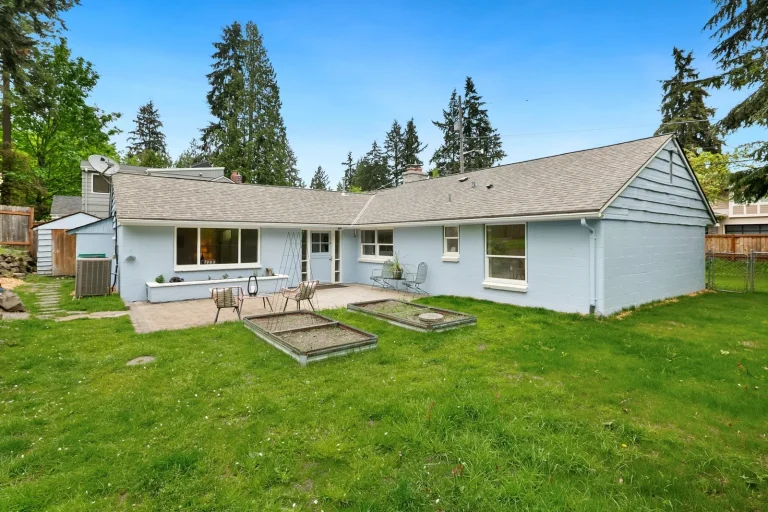
| Mid-century ranches (1950s–1970s) | Single-level living, varying updates; generally more land per dollar | Buyers who want single-floor layouts or generous outdoor space |
| New infill townhomes | Modern finishes, 2–3 stories, often shared walls; HOA fees typically apply | Buyers seeking lower entry price with updated interiors |
| Condos | Less common here than Capitol Hill or Belltown; mostly smaller buildings | Buyers wanting low maintenance in North Seattle |
| Newer single-family homes | Tear-down/rebuild on original lots; modern construction in established settings | Buyers who want new finishes without a far-out suburban commute |
The Craftsman bungalows are the neighborhood’s signature and the most coveted. They’re also over 100 years old in many cases, which means deferred maintenance is common. Older electrical panels, original plumbing, and aging foundations are real issues in this stock. If you’re buying older character homes, budget for the inspection and the reality that systems in a century-old house sometimes need replacing at exactly the wrong time.
Townhomes have multiplied over the past decade as Seattle’s missing middle housing policies pushed infill development into established neighborhoods. They offer a more accessible entry point into Green Lake, but the tradeoffs are real: shared walls, limited outdoor space, HOA fees, and resale that competes against both detached homes and other townhomes simultaneously.
Commute from Green Lake
Green Lake sits roughly 5 miles north of downtown Seattle and 7 to 10 miles from the Eastside. Commute times depend heavily on your destination and the time of day.
| Destination | By Car (Off-Peak) | By Car (Peak Hours) | Transit Option |
|---|---|---|---|
| Downtown Seattle | 15–20 min | 35–50 min | Metro bus to Link Light Rail via Northgate or Roosevelt |
| South Lake Union | 20–25 min | 40–55 min | Bus + light rail; roughly 35–45 min |
| University District | 10–15 min | 20–30 min | Bus (~20 min) or bike via Burke-Gilman Trail |
| Bellevue / Eastside | 25–35 min | 45–65 min | Car is typically faster; transit requires multiple transfers |
| Northgate Link Station | 10 min | 12–15 min | Short bus ride or drive, then south on Link |
The transit picture in North Seattle improved significantly with the Lynnwood Link extension, which brought light rail stations to Roosevelt and Northgate, both within a short bus connection from Green Lake. For people working downtown or in South Lake Union who don’t need a car at the office, combining a bus to Northgate with light rail is a genuinely workable daily option.
For Eastside-bound commuters heading to Microsoft in Redmond or Amazon Bellevue, the car commute is longer and more variable. Green Lake works best for Seattle-centric commuters. If your office is on the Eastside and you’re sensitive to drive time, work the math on your specific route before you buy.
The Burke-Gilman Trail is a real asset here. It provides a car-free commute route for cyclists heading toward the University District, Fremont, or Ballard. Green Lake is genuinely bike-accessible in a way many Seattle neighborhoods aren’t, which reduces the transit burden for people with flexible schedules.
Safety and Neighborhood Feel
Green Lake is one of Seattle’s safer residential neighborhoods, and the park itself contributes to that. High foot traffic, consistent activity from morning to evening, and strong community engagement mean the neighborhood rarely feels isolated or neglected.
That said, Seattle-wide property crime trends affect Green Lake like they affect everywhere. Car break-ins and catalytic converter theft are persistent issues across the city, including here. Most residents take the standard precautions: no valuables visible in parked cars, motion lighting around the property, and knowing their neighbors.
One thing the neighborhood genuinely does well: people use it. The park draws consistent circulation through the area, and active, well-used public spaces with engaged communities tend to handle minor crime differently than isolated or disengaged neighborhoods. Green Lake residents are, as a rule, present and invested in what’s happening around them.
Who Green Lake Is Right For
Based on the neighborhood’s character and what makes it distinctive, Green Lake tends to suit specific buyer profiles particularly well.
Green Lake is likely a great fit if you:
- Want outdoor recreation as a daily habit, not a weekend project
- Work in downtown Seattle, South Lake Union, or the University District (the commute is workable)
- Have kids who would use the park’s programs and facilities on a regular basis
- Value walkability and the ability to run errands on foot
- Are willing to pay a premium for park proximity and long-term neighborhood stability
- Want a neighborhood with a clear identity and a community that invests in it
Green Lake may not be the right fit if you:
- Work on the Eastside and are sensitive to commute time, since the cross-lake drive adds up quickly
- Need maximum square footage per dollar, because the park premium is real and persistent
- Want a dense commercial scene, active nightlife, or a major transit hub at your doorstep
- Are looking at a property right at the lake’s edge without doing a proper drainage check first
Green Lake vs. Neighboring North Seattle Neighborhoods
Buyers often compare Green Lake with Wallingford, Phinney Ridge, and Fremont when targeting North Seattle broadly. Here’s how they stack up:
| Neighborhood | Character | Park Access | Price (General) |
|---|---|---|---|
| Green Lake | Active, family-oriented, lake-centric | The defining feature, literally outside your door | Premium; park-proximity gradient |
| Wallingford | Quieter, bungalow-heavy, tight-knit community feel | Nearby (Gas Works Park, Burke-Gilman Trail) | Slightly lower than Green Lake |
| Phinney Ridge | Ridge views, neighborhood feel, a bit quieter | Woodland Park Zoo and greenbelts nearby | Comparable to slightly lower |
| Fremont | Artsy, younger, more active commercial strip | Lake Union access, Burke-Gilman Trail | Varies by block; generally comparable |
None of these neighborhoods is the wrong answer. They’re different expressions of the same North Seattle experience. Green Lake’s specific edge is the lake itself, and that’s not something a neighborhood a mile away can replicate, however similar the housing stock might look.
For a look at how other Seattle-area neighborhoods compare, see Is Edmonds, WA a Good Place to Live? and Is Kenmore a Good Place to Live? for two more honest looks at what it’s actually like to live in different parts of the Seattle area.
Where to Go From Here
For current listings in the area, search HomeProHouses.com and filter to Green Lake. If you’re selling in Green Lake, the HomePro seller resources cover pricing, preparation, and the process from listing to close.
FAQ: Is Green Lake a Good Place to Live?
Is Green Lake safe?
Green Lake is considered one of Seattle’s safer residential neighborhoods. The constant activity around the park and strong community engagement keep the area feeling occupied and well-monitored. Property crime (particularly car break-ins) occurs city-wide including here, so standard precautions apply. Most residents feel comfortable and describe a strong neighborhood watch culture.
Is Green Lake a good neighborhood for families?
Yes, Green Lake is popular with families. The park’s programs (swimming lessons, sailing instruction, and organized sports) are designed for kids of all ages. The walkability and relatively low-traffic interior streets make it easier for kids to be active outdoors. Public school attendance boundaries should be confirmed directly through Seattle Public Schools for your specific address.
What is the commute like from Green Lake to downtown Seattle?
Off-peak, expect 15 to 20 minutes by car or 30 to 40 minutes by bus plus light rail via Northgate or Roosevelt Station. During peak hours, driving can take 40 to 50 minutes. The transit option is increasingly competitive now that Northgate Link runs regularly. For Eastside-bound commuters, add 20 to 30 minutes to those estimates.
Does Green Lake have flooding problems?
Most of the neighborhood does not have active flooding issues. However, properties close to the lake’s edge or in low-lying areas can experience drainage challenges in heavy rain years. Buyers looking at lake-adjacent homes should ask about drainage history, check King County’s parcel flood mapping, and include drainage in their home inspection scope.
Is Green Lake expensive compared to the rest of Seattle?
Green Lake carries a park-proximity premium that puts it above many comparable North Seattle neighborhoods on a price-per-square-foot basis. Homes closest to the lake command the most. A few blocks back, values come down while still offering easy park access. Demand here is consistently high and inventory is limited, which keeps pricing firm even in softer market conditions.
Ready to Explore Green Lake?
Green Lake is the kind of neighborhood that tends to be a permanent stop once buyers visit. The park, the walkability, the community investment: it’s a combination that’s hard to find elsewhere in North Seattle.
For the full neighborhood overview, see my Green Lake neighborhood guide.

About the Author: Emily Cressey
Emily Cressey is a REALTOR®, Broker, and Team Lead at HomePro Associates, affiliated with Keller Williams Greater Seattle. She has served buyers, sellers, and investors throughout King and Snohomish counties for over 20 years, specializing in investment properties, rental properties, luxury homes, and residential real estate. Emily holds designations as a Certified Probate Real Estate Agent (CPREA) and KW Real Estate Planner.
WA Real Estate License #20109399 · Verify at WA DOL
Reach her at 206-245-8813 or HomeProAssociates.com.
Emily Cressey is a Seattle-area real estate agent with Keller Williams Greater Seattle, serving buyers and sellers across King County and Snohomish County. She specializes in helping buyers find the right neighborhood match, not just the right house, and has guided hundreds of families through the Greater Seattle market.
To talk through whether Green Lake is right for your situation, reach out: call or text 206-245-8813, or visit HomeProAssociates.com. You can also text HOME to 206-245-8813 to get started. Emily makes real estate EASY for you.
Related reading: Best Places to Live in Magnolia for a Short Commute to Campus | Is University District a Good Place to Live? A Local Guide