Selling Without an Agent in Seattle: What It Can Cost
What can selling your house without an agent cost you in Seattle? In Seattle, skipping the agent saves the listing-side fee only if your price lands near what an agent would get. On a hypothetical $900,000 sale with a 2.5% fee, selling 3% lower leaves you $4,500 behind.
The commission is the one cost you can see on a closing statement. The others show up later as a lower offer, a longer wait, or a legal problem.
None of that means you cannot do it. Washington law lets an owner sell their own home without a license, and some people pull it off well. The math behind “keep the commission” leaves out several line items, and any one of them can be bigger than the fee you are trying to save.
This guide goes through those line items for a Seattle seller: what the national numbers say, where the money tends to leak, the paperwork Washington puts on you, and when going it alone really does make sense. Further down, there is a calculation you can rerun with your own price.
What the national numbers say about selling on your own
Start with how rare it has become. NAR’s annual Profile of Home Buyers and Sellers found that for sale by owner (FSBO) sales fell to 5% of all home sales, a record low, and that 91% of sellers used an agent. Back in 1985, FSBOs were 21% of sales.
The same NAR report put the median FSBO sale at $360,000 and the median agent-assisted sale at $425,000. Agent-assisted homes sold for about 18% more. Before you treat that as proof that agents raise prices by 18%, slow down. The homes are not the same, and NAR notes that owners often sell by owner to a friend or relative, so the gap is not a measure of what an agent alone adds.
FSBO sellers also told NAR what was hard. They struggled most with pricing the home, preparing it for sale, and selling within the timeframe they wanted. And 40% of them did not actively market their homes at all.
Price, prep, and time are the problems that cost real money. They are also the three a seller can address before listing: get comparable sales, prepare the house, and set a realistic timeline.
What “saving the commission” really saves
When people say they will save the commission, they usually picture a flat 5% or 6% going to the listing agent. That number was always a negotiated total, split between your agent and the buyer’s agent.
Agent compensation in real estate is negotiable. NAR’s own FAQ says that agent compensation for buyers and sellers continues to be fully negotiable. Since NAR’s practice changes took effect (we cover what changed in our look at the settlement two years later), offers of compensation to buyer agents can no longer be posted on an MLS, and buyers must sign a written agreement with their agent before touring MLS homes. Sellers can still offer buyer-agent compensation off the MLS, and can offer buyer concessions on it, such as help with closing costs.
Two fees used to be bundled in the listing agreement: the one for your own agent and the one for the buyer’s agent. Skipping an agent can save the first. It does not make the second disappear, because many buyers will arrive with an agent and an agreement that says what that agent expects to be paid.
You have options when that buyer shows up: offer to pay their agent, offer a concession toward their costs, tell the buyer to cover it, or negotiate a mix. Each one changes your net.
A sample calculation, so you can use your own price
This is a hypothetical example, not a quote. $900,000 is a round number for the math, not a King County median. It assumes a 2.5% fee on each side as a round example, and that you pay the same buyer-agent amount in every scenario. Your fees and your price will differ.
| Item | How it works at $900,000 | Dollars |
|---|---|---|
| Listing-side fee you might skip | 2.5% of $900,000 | $22,500 saved |
| Buyer-agent compensation you may still offer | 2.5% of $900,000 | $22,500 (not saved) |
| Net if you sell 1% below what an agent’s pricing would have reached | $22,500 saved minus $9,000 lost | $13,500 better off |
| Net if you sell 3% below | $22,500 saved minus $27,000 lost | $4,500 worse off |
| Net if you sell 5% below | $22,500 saved minus $45,000 lost | $22,500 worse off |
Look at the middle row. A seller who avoids a $22,500 fee but sells 3% lower is behind before counting time, ad costs, or legal bills. The break-even is simple: your price shortfall has to stay under the percentage fee you skipped, 2.5% here. The result swings mostly on whether you can price and negotiate as well as a good agent, and time and legal costs come on top.
Real estate excise tax (REET), escrow, and title costs are not on the list because you pay them either way. The Washington Department of Revenue says the seller usually pays the real estate excise tax, and if the seller does not, the buyer is responsible and the tax can become a lien on the property. A sale without an agent does not lower that bill. (For a fuller list of what sellers pay, see our King County cost-to-sell breakdown and the costs of selling a home page.)
Pricing is where the money leaks first
Price is the biggest lever in the whole sale, and it is the one most owners get wrong in both directions. Price too high, and your home sits while buyers watch it go stale. Price too low, and you give away money nobody will ever tell you that you left behind.
Online estimates do not solve this. They are built from public records and a model, and they do not know that your kitchen was redone, your lot slopes toward the street, or the house next door just sold with a bidding war. In a city as uneven as Seattle, with different micro-markets inside the same zip code, a model’s number can miss by a lot in either direction.
What works instead is a real comparison: recently sold homes that match yours in size, condition, age, and location, adjusted for the differences. That means seeing the sold data, walking the home, and knowing what buyers around you are paying for right now. Owners can do a rough version of this with public records. It takes hours, and it is easy to anchor on the one neighbor who sold high.
If you want a starting point, read how I price homes to sell in Seattle, then ask anyone who gives you a number to show you the comparable sales behind it.
Getting buyers in the door without an MLS
Many buyers start their search online, and their agents search the MLS for them. The Northwest MLS (NWMLS) is run by and for member brokers, and an owner cannot post a listing there directly. A listing has to go through a licensed member broker.
That has a practical effect. An owner-sold home usually relies on yard signs, social posts, and the big consumer websites. (Condos and HOAs may limit signs on the road, in front of the home, or in the window, and some allow none, so check your association’s rules first.) Those get views, but they miss the buyers whose agents only send them what they see in the MLS. If your home is not there, you are asking those buyers to find you another way.
NAR found that 40% of FSBO sellers did not actively market their homes. Even if you are in the 60% who do, you carry the work: photos, copy, a listing on the right sites, showing schedules, open houses, and answering every phone call and message at odd hours.
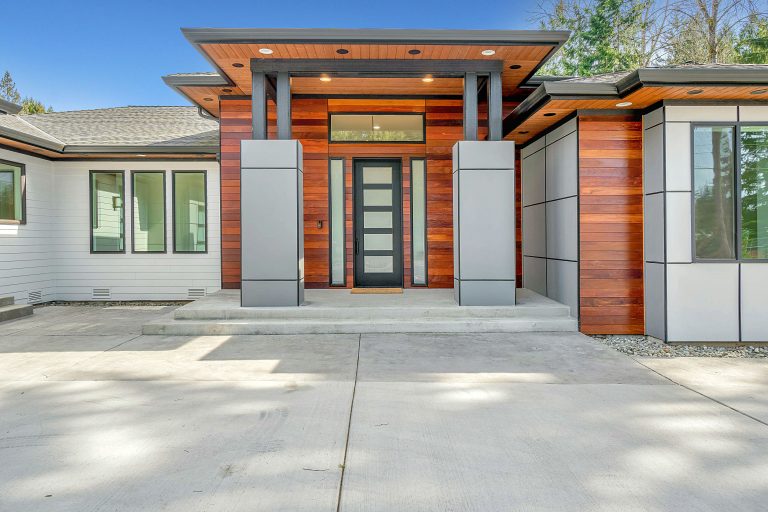
Buyers decide in seconds whether to open a listing, so lead with your best daylight photos, lights on.
The paperwork Washington puts on the seller
Washington gives owners the right to sell without a license: RCW 18.85.151 exempts an owner who acts with reference to their own property. It does not exempt you from the disclosure rules.
The seller disclosure statement
For most sales of improved residential property, Washington requires the seller to complete a disclosure statement, covered in Chapter 64.06 RCW. It asks about things like the roof, plumbing, drainage, sewer or septic, fuel tanks, and structural problems. Agents commonly call it Form 17.
Under RCW 64.06.030, it must be delivered no later than five business days after mutual acceptance of a written contract, unless the parties agree otherwise. The buyer then has three business days from delivery to rescind the agreement by delivering a separately signed written statement of rescission. The buyer’s three-business-day rescission clock starts when the statement is delivered, so a late form keeps your deal open longer. And an answer you knew was wrong can expose you to a claim after closing.
The form is also not a warranty, and the statute says so. But RCW 64.06.050 shields a seller only from errors the seller did not actually know about. In plain English, what you know, you have to say. A leak you patched, a sewer line you replaced, or a permit you never closed are all things that belong on the page.
A listing agent walks sellers through this form regularly and knows which answers buyers press on. An owner is usually filling it out for the first time, alone.
Lead paint for older Seattle homes
Homes built before 1978 are common in Seattle, Shoreline, and Lake Forest Park, and they trigger a federal rule. The EPA says sellers of most pre-1978 housing must disclose what they know about lead-based paint, give the buyer the federal lead pamphlet, include a lead warning statement in the contract, and give the buyer a 10-day opportunity to inspect (the buyer can waive it, or both sides can agree in writing to a different period). You must also keep a signed copy of the disclosures for three years. The EPA names sellers, landlords, property managers, and agents as responsible, which includes owners selling on their own.
If a required step is missing, the buyer can raise it before closing, and a violation can carry federal penalties. You will need to find the current versions of those forms, and make sure they match your contract.
The contract itself
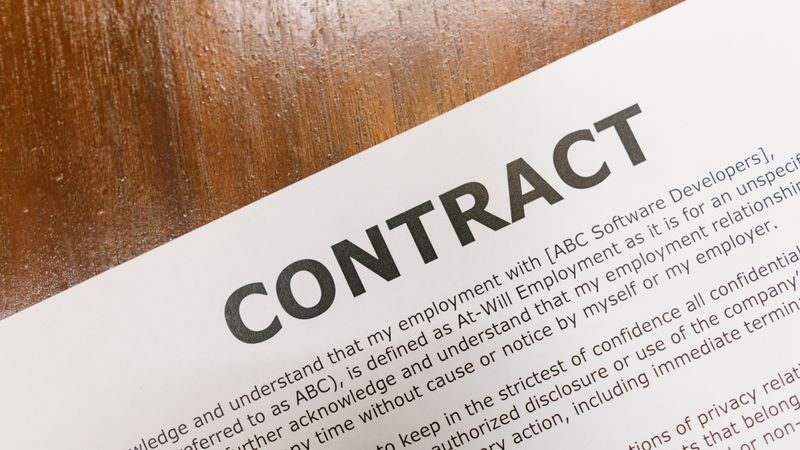
A sale needs a written purchase and sale agreement, with the right addenda for financing, inspection, and any special terms. Seattle agents work from standard NWMLS purchase and sale forms. My license lets me check boxes and fill in dates and blanks on those forms, but not draft custom legal terms the way an attorney would. Selling alone, you would need an attorney to draft or review the contract. A homemade contract, or a template from a random site, can leave out the very protections you need. That is a cost to add to the table above.
Negotiating against a professional
Even when the price is right, the sale is not done. After the offer comes the inspection, and the inspection comes with a repair request. Then the appraisal can come in low. Then the buyer’s lender asks for one more document, a week before closing.
On the other side of that table sits a buyer’s agent who does this every week. They know which requests to make, which ones to drop, and how to read a seller who is nervous about losing the deal. You can get good at this, but you learn it at your own expense.
Three moments are worth thinking about ahead of time:
- The inspection response. A buyer sends a long list of repairs. An experienced agent sorts the real safety and system issues from the cosmetic ones, and counters on credits, repairs, or price.
- A low appraisal. If the appraised value comes in below the contract price, the buyer’s loan may not cover the gap. Someone has to move: you, the buyer, or both.
- Financing contingencies. A loan that falls through costs you weeks. Knowing how strong the buyer’s pre-approval really is can prevent that.
If you started on your own and it is not going the way you planned, my page for FSBO sellers explains your options for getting help partway through.
Safety, scams, and Fair Housing
Selling alone means strangers come into your home. Ask every visitor for a pre-approval letter or proof of funds before a private showing, and ask the same way every time. Have a second person present. Put valuables, medications, and papers with personal information out of sight.
Fraud is a real risk at closing time. The FBI describes real estate wire fraud as a sub-category of business email compromise, and its guidance is to verify changes in account information through a second channel, such as calling your escrow officer at a number you already have, not one from an email. Never wire money or change payment instructions because of an email alone.
Fair housing rules apply when you sell on your own. Washington’s law against discrimination in real estate transactions covers “any person, whether acting for himself, herself, or another”, so it reaches owner-sellers. You cannot make choices about buyers based on protected characteristics, and you should be careful with what you say in ads and during showings. Skip any wording that points to who should live there. Describe the home and let the buyer decide whether it fits.
What it can cost in time
Time is the cost people forget to price. A home that sits without offers starts to look like something is wrong with it, even if the only problem was price. Buyers see how long a listing has been up, and they ask why. That can push the price lower than it would have gone if you had priced it well in week one.
The cost is also personal. Holding a mortgage, taxes, insurance, and utilities on a house you are trying to leave adds up each month. If you have already bought your next home, or you have a relocation date, a long listing can force a hasty discount.
Some owners try selling alone for a few weeks, then call an agent. If that is you, it is not a failure. (Our post on what to do when your house isn’t selling in Seattle walks through the next steps.) The drawback is that the first weeks of a listing usually draw the most attention, and you spend them learning.
When going it alone makes sense, and the middle options
Situations where it is reasonable
There are situations where going it alone is reasonable:
- You already have the buyer. A relative, a neighbor, a tenant, or a business partner who wants the house. You still need a contract and the disclosures, but you do not need marketing.
- The sale is simple and low conflict. Clear title, no estate or divorce complications, no liens, and a motivated buyer.
- You have real experience. You work in real estate, construction, law, or title, or you have sold several properties yourself.
- You are willing to price it from data. You will pay for an appraisal or a comparative market analysis, and you will follow it even when it disappoints you.
- You have time. You can handle showings, calls, and paperwork without pressure from a move date.
The more of these that fit, the stronger the case. If you are selling an inherited home, going through a divorce, relocating on a deadline, or you are unsure what the house is worth, the risks go up fast.
Middle options if you want to pay less
Hiring a full-service agent is not the only alternative to doing it all yourself. Because compensation is negotiable, you can ask for a different arrangement:
- A lower or flat fee for the listing side, with a clear amount for the buyer’s agent.
- Limited service, where you handle showings and pay for the pieces you want, such as MLS exposure and contract help.
- A fee tied to results, such as a smaller base with a bonus for hitting a target price.
- Paying for pieces only: a pricing review, a pre-listing home inspection, photography, and an attorney for the contract.
Whichever route you choose, ask for the full cost in writing, including what happens if the home does not sell and who pays for what. A cheaper arrangement that leaves out the key services may not be cheaper at all.
A checklist before you decide
Answer these plainly, and let the answers decide:
- Do I know what comparable homes near me have sold for in the last 90 days, and why?
- Can I produce the disclosure statement and lead paint forms correctly and on time?
- Who pays the buyer’s agent, and what will I say when asked?
- Who will market the home, and where will it appear?
- Who will show the home when I am at work?
- How will I handle a low appraisal or a long repair list?
- What is my deadline, and what happens if I miss it?
- If I list myself for 30 days and it does not work, what is my plan?
If you cannot answer most of those, a no-obligation conversation with an agent gives you a baseline.
Frequently Asked Questions
Can I legally sell my house in Washington without a real estate agent?
Yes. Washington exempts a person who sells property for their own account from needing a real estate license under RCW 18.85.151. You still have to follow the same disclosure rules as any seller, including the seller disclosure statement under Chapter 64.06 RCW and the federal lead paint rules for homes built before 1978.
Do I still have to pay a buyer’s agent if I sell my Seattle home myself?
Not by law, but many buyers will arrive with an agent and a written agreement that says what that agent expects. NAR’s settlement changes mean offers of compensation can’t be posted on the MLS, but sellers can still offer compensation off the MLS. If you offer nothing, some buyers may offer less or skip your home.
How much does selling without an agent really save?
On a hypothetical $900,000 sale with a 2.5% listing fee, skipping the fee saves $22,500, but selling 3% lower costs $27,000, which leaves you $4,500 behind. At a 1% drop you come out ahead. The result swings on how well you price and negotiate.
Can I list my FSBO on the Northwest MLS?
No, not directly. The NWMLS is a broker-run database, and a listing has to go through a licensed member broker. Some brokers offer limited-service or flat-fee arrangements that place a home on the MLS for a set price. Ask what is included, who handles offers, and what you owe if the home does not sell.
What do FSBO sellers struggle with most?
Pricing, preparation, and timing, plus thin marketing and incomplete paperwork. FSBO sellers told NAR they struggled most with pricing, preparing the home, and selling within their timeframe. On the paperwork side, a late disclosure statement keeps the buyer’s rescission window open longer, and an inaccurate answer can expose you to a claim later.
Start with a real price for your home
If you are deciding between selling on your own and hiring help, the first number to get is what your home would sell for. I will pull comparable sales from the Northwest MLS, walk through your costs and net, and tell you plainly whether you are better off on your own. Request my Free Seller Report and Consultation on HomeProAssociates.com. Prefer to talk first? Call or text Emily Cressey at 206-245-8813.

About the Author: Emily Cressey
Emily Cressey is a Seattle-area listing agent and REALTOR® with HomePro Associates at Keller Williams Greater Seattle, known for partnering with sellers by investing her own funds into every listing to make sure it’s looking its best. Whether that’s through getting some new paint, staging, minor repairs, professional cleaning, or whatever it takes to get top dollar for your sale. A real estate investor since 2002 and a licensed broker since 2008, her goal is simple: sell it for top dollar in a way that’s time-efficient and low-stress for the owner. Outside of work, she’s an avid rose gardener, which may explain her eye for curb appeal.
Thinking about selling your home? Call or text Emily at 206-245-8813, book a free call. We make real estate EASY for you.
WA Real Estate License #20109399 · Verify at WA DOL