What Seattle Buyers Pay More For: ADUs and Flex Space
What do Seattle buyers pay more for: an ADU, a separate-entry basement, or a flex room? Seattle buyers tend to pay more for permitted space that earns rent or fits how they live. An ADU or basement unit only counts if it is legal, and a flex room only counts if it is usable.
A basement apartment you cannot legally rent is, to an appraiser and often to a buyer’s lender, just a finished basement. That one fact explains why two Seattle homes with the same square footage and the same finished lower level can be valued very differently.
Buyers do pay extra for the right kind of space. They pay for rooms that bring in income, rooms that hold a parent or a grown kid, and rooms that turn into an office without a remodel. But the premium depends on paperwork as much as drywall. Permits, exits, and how the space is measured and described all change what a buyer, a lender, and an appraiser will give you credit for.
This guide covers the three features Seattle buyers ask about most: accessory dwelling units (ADUs), separate-entry basements, and flex rooms. You will see what the city and the state actually allow, how lenders treat each feature, and what to document before you list or make an offer.
Why these three features earn a premium
Most home features are a matter of taste. Granite or quartz, gray floors or oak. Buyers have opinions, but they rarely pay a big premium for any of them.
These three are different because they solve a money problem or a space problem.
- An ADU can be rented to a tenant, used by family, or both. It gives the buyer a way to offset the mortgage or house a relative without buying a second property.
- A separate-entry basement works the same way when it is set up as a legal unit. It can also serve as a guest suite or a private space for an older kid.
- A flex room changes jobs as the household changes. Office this year, nursery next year, hobby room after that.
In a city where the cost of buying is high and households keep changing shape, buyers value anything that stretches one purchase across more uses. Owning rentals since 2003 taught me to run the numbers first: what does the unit rent for, and can I legally collect it? An owner-occupant asks a different question: does it fit my family? The strongest listings answer both, with paper to back it up.
The word that matters in all of this is legal. Keep it in mind as we go through each feature.
ADUs in Seattle: what the rules allow now
An accessory dwelling unit is a second, smaller home on the same lot as the main house. It has its own kitchen, bathroom, and sleeping area. It can be a backyard cottage (a detached ADU, or DADU), an apartment over a garage, or a unit built into or attached to the main house.
Washington and Seattle have both loosened the rules in recent years. Here is what the official sources say.
| Question | What the rules say | Source |
|---|---|---|
| How many ADUs per lot? | Seattle allows two ADUs per lot in addition to the main home, on all lots | Seattle’s Building Connections update |
| How big can one be? | Up to 1,000 square feet in every zone where ADUs are allowed | Seattle’s ADU update |
| How tall? | Up to 32 feet in most Neighborhood Residential zones, including in the rear yard | Seattle’s ADU update |
| Does the owner have to live on the lot? | The state says a city may not require it | RCW 36.70A.681 |
| What is the lowest size cap a city can set? | A city cannot set a maximum floor area below 1,000 square feet | RCW 36.70A.681 |
| Parking? | Seattle says standards such as parking do not apply to ADUs; the state limits parking requirements near a major transit stop | SDCI; RCW 36.70A.681 |
Two cautions. First, these are the broad rules. Your specific lot may be limited by things like steep slopes, wetlands, or shoreline rules (Seattle groups several of these under “environmentally critical areas”). Second, the city has changed these rules several times, so confirm current numbers with the Seattle Department of Construction and Inspections (SDCI) before you buy a lot for an ADU project or spend money on plans.
What a buyer is really paying for
When a buyer pays more for an ADU, they are paying for three things:
- The right to use it. That means the unit was built or legalized through a permit. Seattle’s permit office says plainly that units “are not legal unless they have been established through a permit process.”
- A unit that works. Its own entrance, kitchen, bath, and sleeping area, plus code-compliant heating, electrical, and egress.
- A way to finance it. This is the part most sellers overlook.
Every street is different, so the real question is what an ADU is worth on yours. My pricing approach starts with the sales that actually happened nearby, not a formula.
The financing catch with two ADUs
Seattle lets an owner have two ADUs. Fannie Mae, whose rules shape a big share of home loans, says something different about one-unit homes. Its Selling Guide states that “only one ADU is permitted on the parcel of the primary one-unit dwelling,” and that ADUs are not permitted with a two- to four-unit dwelling.
So a lot with a house and two ADUs may not fit standard conforming financing. Guidelines change, so confirm with your lender. Buyers could need a different loan type, a bigger down payment, or a lender with its own portfolio rules. That can narrow your pool of buyers and affect the price. If you are thinking about building a second ADU to sell, talk to a lender first, such as one of my recommended Seattle lenders. If you are buying a lot that already has two, ask the lender early which loan programs will work.
The same Fannie Mae guide has more detail on what an ADU must be to count. It has to be smaller than the main home and have its own entrance, kitchen, sleeping area, and bathing area. The kitchen needs cabinets, a countertop, a sink with running water, and a stove or a stove hookup. An appraiser then reports the ADU’s living area on a separate line in the appraisal grid, not as part of the main home’s finished square footage.
That separate line matters. It means an ADU is valued on its own merits, often using sales of other homes with ADUs. If there are few of those nearby, the appraiser has less to work with. Fannie Mae allows older sales as comparables for an ADU, and an active listing or pending sale can support marketability. For an ADU that does not comply with current zoning, the appraisal must include at least three settled sales, at least two of them with the same non-compliant use.
Can rental income help a buyer qualify?
Sometimes. Fannie Mae allows exceptions to its usual rule that rental income from a principal residence does not count, including for properties with accessory units. The details depend on the loan program, how the rent is documented, and the lender’s own rules. If an ADU is part of why you want a home, do not assume the rent will count. Ask your lender before you write an offer, not after your inspection period starts.
Separate-entry basements: legal unit or just a nice lower level?
A finished basement with its own door is easy to misread in a listing. Plenty of older homes have a lower level with a kitchen, a bath, and an outside entrance that was added decades ago. The photos look like an apartment. The question is whether the city and the lender see one.
The permit question
Seattle’s guidance on illegal living units describes them as living spaces, usually apartments with separate kitchens and bathrooms, “installed without a permit” that may not meet zoning and safety standards. The consequences for an owner can be real:
- If the city issues a notice of violation and the owner does not fix it in a timely way, it may fine the owner $150 to $500 a day.
- The owner may be required to stop renting the unit if a permit cannot be obtained.
- A tenant in a unit identified as illegal does not have to move until they receive written notice.
The city also says owners can often legalize an existing unit. For an apartment in a house, the owner has to follow the rules for ADUs. SDCI lists “legalizing an existing unit” as a project that needs a construction permit to establish use.
For a seller, that is good news and a to-do list. An unpermitted lower-level unit may be fixable, but not every unit can be legalized. The fix costs time and money, and the work may require changes to meet current code. Ask SDCI for current permit timelines. For a buyer, it is a reason to ask for permit history before you count on the rent.
If you are buying a home with a lower-level unit, the paperwork deserves a close look before your inspection deadline. My document review service walks buyers through the disclosures and forms.
How lenders measure a basement
Even a fully legal, beautifully finished basement is measured differently from the rest of the house. Fannie Mae requires appraisers to follow the ANSI Z765 standard for measuring square footage. It treats a level as below grade if any part of it is below grade, “regardless of the quality of its finish or the window area of any room.” Finished below-grade space is reported on its own line and adjusted separately.
What that means in plain terms: say a home is advertised at 3,000 square feet and 1,000 of that is a finished daylight basement. To the appraiser, it is not a 3,000 square foot home. It is a 2,000 square foot home plus a finished lower level. Buyers who compare listings by total square footage can be misled, and sellers who count the basement in the headline number can run into trouble at the appraisal.
This is also why the way you describe the lower level matters. “Finished lower level with separate entrance” is accurate. “Legal mother-in-law apartment” is a claim, and you need the permit to back it up.
A buyer’s checklist for a basement unit
Before you pay extra, confirm:
- Permit history. Ask your agent to look up permits with SDCI, and ask the seller what they know.
- Kitchen and bath. Does the space meet the ADU definition above, or is it a bedroom with a mini fridge?
- Separate entrance and a safe way out. Is the entry real, and does the sleeping area have a proper emergency exit?
- Utilities and heat. Are they shared, and can the unit be heated and ventilated properly?
- Insurance. Does the policy cover a tenant? Fannie Mae’s rules on a nonconforming ADU specifically look at whether it could jeopardize future insurance claims.
- Your plan. If rent is part of the math, can you legally collect it?
Flex rooms: the bedroom question
A flex room is a space that can be an office, a den, a playroom, or a guest room. Buyers like them because the room does not lock them into one use.
A flex room usually shows up as marketability rather than a separate line on the appraisal. It makes the house feel bigger and more useful. When two homes are otherwise close, the one with a room that works for daily life has an edge. But a flex room can go wrong in one specific way: calling it a bedroom when it is not.
What counts as a bedroom
Building code and the permit record matter more than the listing when it comes to what counts as a bedroom. In general, a sleeping room has to meet code requirements, including a way to get out in an emergency. A bonus room over the garage, a basement den, or a converted porch may not qualify, even if it has a bed in the photos.
That matters because bedroom count shapes who sees your listing, how buyers compare it, and how it is described in the appraisal. If a listing says four bedrooms and the inspector says three, the buyer’s confidence in everything else drops.
My rule for sellers is simple. If the room clearly meets the standard for a bedroom, call it one. If you are not sure, list it as a flex room, den, or office, and let the buyer decide how to use it. You give up little, and a buyer who wants a bedroom there can check what it would take to make it one. You also avoid an argument at inspection if it does not qualify.
What makes a flex room worth more
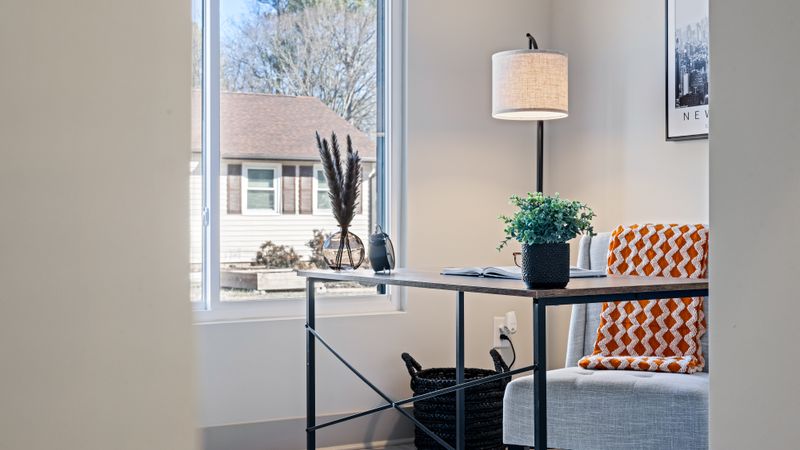
Not every spare room earns a premium. The ones that show best tend to share a few traits:
- Natural light and a real door. A room that feels like a room, not a hallway nook.
- A location away from the main living area. Buyers working from home care about quiet.
- Finished to the same standard as the rest of the house. Heat, outlets, flooring, and ceiling height all match.
- Permitted work. If a garage or attic was converted, the permit should exist.
- Flexibility to change. Closets, a nearby bathroom, and space for furniture make it easy to use as a guest room.
How to tell what these features are worth on your home
You may notice I have not given you a dollar figure for any of these features. That is on purpose. The premium for an ADU or a legal basement unit varies by neighborhood, lot, finish, rent potential, and how many comparable homes sold recently. A number from another city, or even another part of Seattle, can mislead you in either direction.
The reliable way to price these features is with comparable sales. That means looking at homes in your area that sold with a similar feature, adjusting for differences, and checking how long they took to sell. I pull this from the Northwest MLS. Here is how it works:
- Find the right comps. Homes with a similar ADU or legal lower-level unit, the same size range, and similar condition.
- Check legality for each comp. A permitted unit and an unpermitted one are not the same product.
- Separate the pieces. Value the main house, the unit, and the lot on their own terms.
- Test the income side. What would the unit rent for, and what would an investor pay for that rent?
- Look at days on market. A high price that sits is not a premium. It is a guess.
When there are few comps, which is common for ADUs, the range of possible values gets wider. That is not a problem if you plan for it. Price the home with a clear story, have the permits ready, and be willing to let buyers see the numbers. My post on how to price your home in King County’s shifting market covers what happens when a price is set by hope instead of comps.
A simple comparison
Here is how the three features compare on the things that decide whether the premium holds up.
| Feature | Why buyers pay more | What can kill the premium | What to have ready |
|---|---|---|---|
| ADU | Rent or family use, separate home on the lot | No permit, limited financing, few comps | Permit and final approval, lease history if any, utility setup |
| Separate-entry basement | Rent, guest or family space | Unpermitted kitchen, below-grade measurement, weak egress | Permit to establish use, final inspection, floor plan |
| Flex room | Adaptable space, office or guest room | Calling it a bedroom when it is not, poor finish | Permit for any conversion, accurate listing description |
What to do before you list, and before you buy
If you are selling
Picture two sellers with similar houses in Shoreline (these are hypothetical, not clients). The first has a finished lower level with a kitchen and a separate door, and no paperwork. The second has a similar space that was legalized through a permit years ago, with the final inspection on file.
Both homes look alike in photos. The second seller can say “legal ADU” and hand over the permit and final inspection showing it was established as one. The first has to say “finished lower level” and let buyers decide what it is. In an offer situation, the second home gives buyers and lenders something solid to work with. The first home has a question mark.
Before you list a home with extra space:
- Pull your permit records. Know what exists before a buyer’s agent does.
- Decide whether to legalize. Ask SDCI and a contractor what it would take. In some cases the better move is to sell as-is and price for it.
- Describe the space accurately. Use words that match the paperwork.
- Measure correctly. Know which square footage is above grade and which is not.
- Talk to a lender who knows ADUs. They can tell you which buyers and loans will work.
I would not build an ADU only to sell the house. Construction takes time, permits take time, and you need to see what comparable sales say before you spend. If you plan to stay a few years first, rent or family use may help offset the cost, but that depends on the build cost and the rent. Get a bid and a rent estimate before you decide. If you are listing soon, a clean, honest presentation of what you already have usually beats a rushed project. And whatever you decide, price it to avoid a price cut the first time.
If you are buying
- Ask for permits and the final inspection record on any unit or conversion.
- Ask your lender how an ADU or lower-level unit affects your loan before you write an offer.
- Do not count rent you cannot legally collect.
- Have your inspector look at heat, electrical, and exits in the extra space.
- Ask your agent to run comps for homes with and without the feature, so you know what you are paying for.
Frequently Asked Questions
Does an ADU add value to a Seattle home?
It can. Whether it does, and by how much, depends on the neighborhood, the quality of the unit, and whether it is legal. A permitted ADU gives buyers rent or family space and a clear story for lenders, while an unpermitted one may add little. Start with the permit and final inspection, check financing, then get a comparable-sales review from Northwest MLS data.
How many ADUs can I have on a Seattle lot?
Seattle’s own update says it allows two ADUs per lot in addition to the main home, with a size limit of 1,000 square feet each. Your lot’s slopes and other site conditions can limit what fits, so confirm with SDCI. Also know that Fannie Mae’s guide allows only one ADU on a one-unit property, so ask a lender how two ADUs affect financing.
Is a basement apartment with its own entrance legal to rent in Seattle?
Generally only if it was established through a permit. Seattle says units are not legal unless they went through the permit process, and an owner who gets a notice of violation and does not fix it can be fined $150 to $500 a day. A separate door and a kitchen do not make a unit legal. Ask for the permit, and check with SDCI about older units or legalizing one.
Does a finished basement count in a home’s square footage?
Usually not in the above-grade number. Fannie Mae’s appraisal rules follow the ANSI Z765 measuring standard, and a level is below grade if any part of it is below grade, no matter how nicely it is finished. Appraisers report finished lower levels separately. Listings can still mention the space, but the headline number should be accurate.
Does a flex room count as a bedroom?
Not automatically. Building code and the permit record matter more than the listing, and a sleeping room has to meet code, including a way out in an emergency. If you are not sure a room qualifies, list it as a flex room, den, or office. Buyers and inspectors can then judge it for themselves, and you avoid a surprise at inspection.
Thinking about adding or selling extra space? Let’s look at your numbers
If you own a home with an ADU, a lower-level unit, or a flex room, the first step is knowing what the market will pay for it. I will pull comparable sales from the Northwest MLS, check your permit history with you, and tell you straight whether the space helps you or needs work first. Call or text Emily Cressey at 206-245-8813, or request my Free Seller Report and Consultation on HomeProAssociates.com to get started.

About the Author: Emily Cressey
Emily Cressey is a Seattle-area listing agent and REALTOR® with HomePro Associates at Keller Williams Greater Seattle, known for partnering with sellers by investing her own funds into every listing to make sure it’s looking its best. Whether that’s through getting some new paint, staging, minor repairs, professional cleaning, or whatever it takes to get top dollar for your sale. A real estate investor since 2002 and a licensed broker since 2008, her goal is simple: sell it for top dollar in a way that’s time-efficient and low-stress for the owner. Outside of work, she’s an avid rose gardener, which may explain her eye for curb appeal.
Thinking about selling your home? Call or text Emily at 206-245-8813, book a free call. We make real estate EASY for you.
WA Real Estate License #20109399 · Verify at WA DOL