Builder Rate Buydowns in Seattle: How They Work
What is a builder rate buydown on a new construction home near Seattle? A rate buydown is money a builder, seller, or you pay to lower your mortgage rate, for the whole loan (permanent) or the first 1 to 3 years (temporary). Near Seattle, ask what your payment is in year three.
A builder once paid about $10,000 to bring the interest rate on one of my rental purchases down from about 7.5% to about 6%. It was an out-of-state investor loan, and the cut was permanent for the life of the loan. That one concession lowered my monthly payment far more than the same $10,000 off the price would have.
Builders do this. Sellers of regular resale homes can do it too. And you can do it for yourself, with your own cash, if lowering the payment matters more to you than keeping the cash. The catch is that “buydown” is a loose word. It covers two very different tools, and one of them can hide a payment jump that arrives in year three.
If you are looking at new construction in Seattle, Shoreline, Bothell, Lynnwood, or anywhere else in King or Snohomish County, this guide walks through both kinds, shows the math on a sample loan, and gives you a list of questions to ask before you sign anything.
What a rate buydown actually is
Your mortgage rate is not a fixed fact of nature. It is a price, and like most prices it can be negotiated or bought down. A buydown means someone pays money up front, usually at closing, in exchange for a lower interest rate. That someone can be a builder, a seller, or you.
There are two flavors:
- Permanent buydown. You pay “discount points” and the rate is lower for the entire life of the loan.
- Temporary buydown. The rate is lowered for the first one to three years, then steps back up to the real rate on the note.
Both lower your payment. They do it in very different ways, and they suit very different buyers. Keep reading, because mixing them up is a common and costly mistake.
Permanent buydowns: paying points
The Consumer Financial Protection Bureau explains that one discount point equals one percent of your loan amount, paid at closing, and that paying points lowers your rate compared with the same loan at zero points. On a $600,000 loan, one point is $6,000.
How much a point lowers your rate changes with the lender, the loan type, and the day. Pricing varies by lender and by day. Ask for the rate at 0, 1, and 2 points in writing before you agree to anything.
The decision comes down to one question: how long will you keep the loan? Points cost money now and pay you back slowly, month by month. The CFPB suggests comparing your total costs over the shortest, longest, and most likely time you will hold the mortgage. That is the break-even idea, and it is the heart of every buydown decision.
A sample permanent buydown (hypothetical)
Say you borrow $600,000 on a 30-year fixed loan at 7.00%. Your principal and interest payment is about $3,992 a month. Now suppose a lender prices it so that each point lowers the rate by 0.25% (this is an example only, not a quote).
| Points paid | Cost at closing | Rate | Monthly principal and interest | Monthly savings | Break-even |
|---|---|---|---|---|---|
| 0 | $0 | 7.00% | $3,992 | $0 | n/a |
| 1 | $6,000 | 6.75% | $3,892 | $100 | about 60 months |
| 2 | $12,000 | 6.50% | $3,792 | $199 | about 60 months |
In this example you need to keep the loan about five years before the points pay for themselves. Sell or refinance in year three and you lose money on the deal. Stay ten years and you come out well ahead.
Your own numbers will differ from this example, because your loan amount, rate, and timeline all change the answer. A lender can price points and temporary buydowns side by side for your actual loan, and my recommended Seattle lenders will do exactly that.
This is why a permanent buydown paid by a builder is so valuable. If the builder pays the points, you get the lower rate for life and you never face the break-even question. The risk shifts to them.
Temporary buydowns: the 2-1 and 3-2-1
A temporary buydown lowers your rate for the first few years, then it climbs back to the full rate. Two versions come up the most.
- 2-1 buydown. Your rate is 2 points lower in year one, 1 point lower in year two, and the full rate from year three on.
- 3-2-1 buydown. Your rate is 3 points lower in year one, 2 points in year two, 1 point in year three, and the full rate from year four on.
The money for the discount is deposited into an account at closing, and the account makes up the difference between the payment you owe and the payment you actually pay each month.
A sample 2-1 buydown (hypothetical)
Using the same $600,000 loan at a 7.00% note rate:
| Period | Rate you pay | Monthly principal and interest | Savings vs. full payment |
|---|---|---|---|
| Year 1 | 5.00% | $3,221 | $771 |
| Year 2 | 6.00% | $3,597 | $395 |
| Year 3 and after | 7.00% | $3,992 | $0 |
Adding up the savings, a seller or builder would need to put about $13,985 into the account to fund that 2-1 buydown. On a 3-2-1 version of the same loan, the number is about $27,513.
A temporary buydown is a good fit when you expect your income to rise, when you plan to sell or refinance within a few years, or when you have a big move-in cost year (new furniture, window coverings, a fence) and want breathing room. It is a poor fit if your budget only works with the lowest payment forever. Plan for the year-three payment on day one.
Two rules that surprise buyers
Fannie Mae’s rules for conforming loans spell out two things worth knowing. First, the lender must qualify you at the actual note rate, not the lower bought-down rate. A temporary buydown does not help you qualify for a bigger loan. It only helps your cash flow after you close. Second, those rules treat temporary buydowns as available for primary residences and second homes, not investment properties. Other loan types, such as FHA, VA, jumbo, and bank portfolio loans, have their own rules, so ask your lender which apply to you.
What we hear builders offering around Seattle
Here is how I want to frame this section. These are things we hear about from lenders, other agents, and builder sales offices in different neighborhoods around the Seattle area. We are not promising that any particular builder is offering any of this right now, and incentives change quickly. Treat the list as questions to ask, not a menu you can count on.
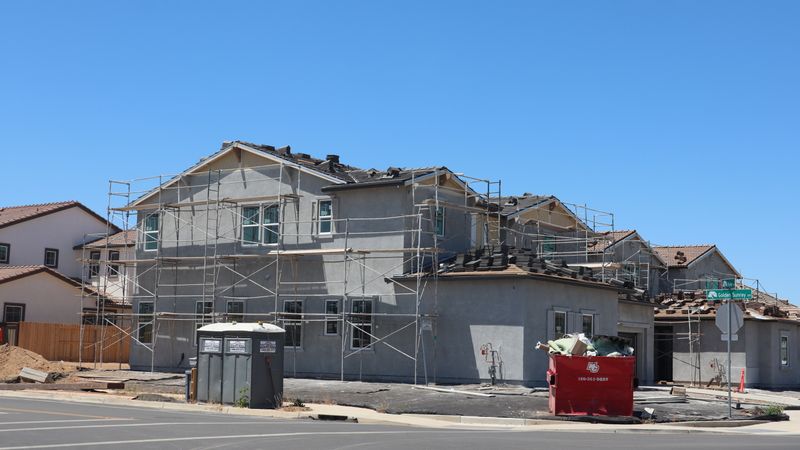
- Closing cost credits. The builder pays some of your closing costs.
- Rate buydowns. Often permanent or temporary, and often tied to using the builder’s preferred lender.
- A flexible credit. One pot of money you choose to spend on closing costs, a buydown, or sometimes a special loan product.
- Design or upgrade allowances. Money toward flooring, appliances, or finishes.
- Quick move-in discounts. Better terms on homes that are already finished and sitting.
- Price reductions. Sometimes advertised, sometimes only offered when you ask.
Notice that most of these are not price cuts. One common reason builders favor incentives over price cuts is comp protection: a lower recorded price becomes a comparable sale for the homes they still have to sell. Incentives let them protect the price while still making the deal work for you.
Which of these is worth asking for depends on the builder, the home, and your loan. My new construction guide covers how the purchase process works, and you can browse new construction listings to see what is on the market near you.
Why a buydown can beat a price cut
Most buyers instinctively want the price cut. The math often says otherwise.
Take the sample loan again. Imagine a builder will give you $12,000 and you can choose how to take it.
| Option | What $12,000 does | Monthly principal and interest after |
|---|---|---|
| Price cut | Lowers the loan by $12,000 | Saves about $80 a month |
| Two points, permanent (hypothetical pricing) | Lowers the rate from 7.00% to 6.50% | Saves about $199 a month |
The buydown saves about two and a half times as much each month in this example. The price cut has one thing going for it, though. It lowers your loan balance, and it does not depend on how long you stay. If you think you will sell in two years, the price cut can come out ahead. The right answer depends on your timeline, which is why you should run both numbers before you choose.
Who can pay for a buydown?
Builders, resale sellers, and buyers can all pay for one. Here is how each works.
Resale sellers can offer the same thing
Builders did not invent this. A regular seller of a resale home in Lynnwood, Shoreline, or Bothell can offer a buyer credit that pays for a rate buydown, and it is a tool many sellers never think to put on the table.
For a seller, the appeal is simple. A $10,000 credit toward the buyer’s rate often feels more valuable to the buyer than a $10,000 price cut, because it moves the monthly payment more. For equal dollars, the seller’s net is close to the same either way. And the recorded sale price stays higher, which can help your neighbors’ future appraisals.
A few cautions for sellers:
- Do not raise the price to cover the credit. Lenders and appraisers watch for that, and it can sink a deal.
- Check the limits before you promise anything. A buyer’s loan caps how much you can contribute (see the next section).
- Put it in writing in the contract. The credit has to flow through the closing, and the buyer’s lender has to approve it.
If you are selling and your home has been sitting, a buydown credit is worth discussing with your agent before you cut the price again.
How much can a seller or builder contribute?
Every loan program caps what an “interested party” (a seller, a builder, a real estate agent) can contribute toward your costs. Those caps include buydowns. Fannie Mae’s Selling Guide says the cost of a temporary or permanent buydown funded by an interested party counts toward the limit. For conforming loans the caps depend on how you use the home and how much you put down.
| Occupancy | Down payment | Maximum contribution |
|---|---|---|
| Primary residence or second home | Less than 10% down | 3% |
| Primary residence or second home | 10% to 25% down | 6% |
| Primary residence or second home | More than 25% down | 9% |
| Investment property | Any amount | 2% |
Those percentages apply to the lower of the sales price or the appraised value. FHA, VA, jumbo, and portfolio loans each have different caps, and your lender is the final authority. Ask for the number early. A builder who promises $30,000 in incentives on a home where you are only allowed to receive a smaller amount has not actually promised you $30,000.
This also explains why buyers with a small down payment sometimes cannot take the full incentive. Say the cap is 3% of a $700,000 home: the most the builder can contribute is $21,000, no matter what the brochure says.
You can buy down your own rate
You do not need a builder or a seller to do this. If you have cash and plan to keep the loan for a long time, you can pay points yourself. The same break-even math applies, and the same rule holds: if you might sell or refinance in the first few years, points are a gamble.
Two practical thoughts. First, if rates fall and you refinance, the points you paid on the old loan are gone. Second, cash has other uses. Money that goes into points is not available for an emergency fund, a larger down payment, or a house project. Compare the points to the other uses, such as a larger down payment or three to six months of payments in reserve.
Compare the whole deal, not just the rate
A shiny rate can disguise a weaker deal. When you compare a new construction offer with another home, line up the full picture.
- Base price and lot premium. Is the incentive coming out of a price that was already inflated?
- Upgrades. What is actually included, and what costs extra?
- HOA dues. A lower payment today can be eaten by a higher monthly HOA. New townhomes in particular come with shared-maintenance questions, covered in my new construction townhome warning list.
- Warranty coverage. What is covered, for how long, and who handles the claim? Get the written warranty, the claim process, and the response timeline. Builder quality varies by crew and division, which I cover in my guide to builder reputation and warranties.
- Completion timing. Rate locks expire. What happens if the home finishes late?
- Preferred lender requirement. Many builder incentives require you to use their lender. Ask for a Loan Estimate from at least one outside lender so you can compare.
- Your own inspection rights. New does not mean perfect. Get an independent inspection anyway.
The preferred lender point deserves an extra note. A builder’s lender may offer a genuinely good deal. It may also offer a rate that is a little higher than the market, with the incentive covering the difference. The only way to know is to compare Loan Estimates side by side. One more thing: the sales rep at a builder’s office works for the builder, so read my post on keeping your own agent at a builder’s sales office before you tour.
Mistakes to avoid
Judging a 2-1 by the year-one payment. The year-one payment is the lowest you will ever pay. Judge the deal by the year-three payment.
Assuming the incentive is the same as a discount. If the sticker price was raised to pay for the incentive, you may be paying for your own credit.
Skipping the written quote. A verbal “we can get you around 6%” is not a quote. Ask for a Loan Estimate.
Ignoring the cap. Incentives are limited by your loan program. Ask early how much of the offered credit you are allowed to use.
Forgetting about resale. If you may sell in three years, you will not keep a permanent buydown long enough to earn it back. A price cut or a temporary buydown may suit you better.
Two buyers, same budget (hypothetical)
To make this concrete, picture two buyers with the same $600,000 loan and different plans. These are hypothetical scenarios, not real clients.
The first buyer expects to stay in the home at least ten years and wants the steadiest budget possible. A permanent buydown fits her. She takes the builder’s credit as points, accepts a lower closing-cost cushion, and enjoys the lower payment every month for a decade.
The second buyer is relocating for a job and expects to move again in about three years. A permanent buydown would not pay back before he sells. A temporary 2-1 buydown, or simply the price cut, fits him better. He gets breathing room in the early years and does not pay for savings he will never collect.
Same builder, same credit, same house. Different best answer.
Frequently Asked Questions
What is the difference between a permanent and a temporary rate buydown?
A permanent buydown uses discount points to lower your interest rate for the entire loan. A temporary buydown, such as a 2-1 or 3-2-1, lowers your rate for the first one to three years, then your rate returns to the full note rate. Permanent buydowns pay off with time. Temporary buydowns give you early cash flow but a higher payment later.
Is a builder rate buydown better than a price reduction on a new home?
It depends on how long you keep the home. A rate buydown usually lowers your monthly payment more than the same dollars taken off the price, so it favors buyers who plan to stay for years. A price cut lowers your loan balance regardless of timeline, so it can win if you may sell soon. Compare both on your actual loan.
Can a seller of a resale home in the Seattle area pay for my rate buydown?
Yes. Sellers can offer a credit that pays for points or a temporary buydown, as long as the amount fits your loan program’s limits on seller contributions. The credit must be written into the purchase contract and approved by your lender. For conforming loans, those limits range from 2% to 9% of the price depending on how you use the home and your down payment.
Do I need to use the builder’s lender to get the incentive?
Often the best incentives require the builder’s preferred lender, though not always, so ask before you commit. Then get a Loan Estimate from a second lender and compare rate, fees, and total cost side by side. Ask in writing what your credit drops to if you use an outside lender, and compare the APR and closing costs on both Loan Estimates. A good builder lender deal holds up against an outside quote.
Thinking about buying new construction? Let’s run your numbers
Before you sign a builder contract, get the full picture on paper: the rate, the points, the cap on contributions, and your payment in year three, not just year one. I help buyers across Seattle, King County, and Snohomish County compare builder offers against resale homes. Call or text Emily Cressey at 206-245-8813, or start with my Guide to Buying a Home in Seattle on HomeProAssociates.com, and we will line up the incentives and run both payments before you decide.

About the Author: Emily Cressey
Emily Cressey is a REALTOR® and broker with HomePro Associates at Keller Williams Greater Seattle who specializes in walking buyers and sellers through the real numbers behind a purchase or sale, closing costs, financing programs, earnest money, so there are no surprises at the table. With a bachelor’s degree in Economics and a personal finance book under her belt, she is both capable and interested in making sure you understand the financial side, including the risks, rewards, and “invisible costs” of buying and selling a home.
Have questions about what a purchase or sale will actually cost you? Call or text Emily at 206-245-8813, book a free call. We make real estate EASY for you.
WA Real Estate License #20109399 · Verify at WA DOL