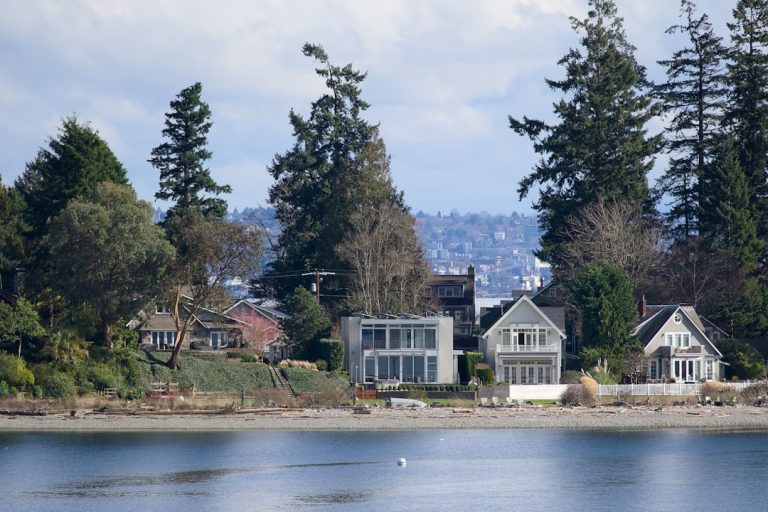
What Buyers Wish They Knew Before Buying in Capitol Hill
What do buyers wish they had known before buying a home in Capitol Hill, Seattle?
Parking costs money here, old buildings carry special assessment risk, knob-and-tube wiring can derail insurance and financing, and the HOA fees in Capitol Hill’s dense condo stock add up to far more than most buyers budget for before they make an offer.
Capitol Hill is one of Seattle’s most sought-after urban neighborhoods. Walkable. Transit-rich. Loaded with coffee shops, restaurants, live music, and some of the city’s best nightlife and culture. For buyers who want the energy of city living without paying the full downtown premium, Capitol Hill has long been an appealing option.
But the sticker price on any Capitol Hill property still doesn’t tell you the whole story. And the home you can afford to buy isn’t always the same as the home you can afford to own.
If you’re seriously shopping in Capitol Hill, this post covers the surprises that catch buyers off guard: the things that come up after the offer is accepted and you’re suddenly wondering why nobody mentioned them before.
If you’re still weighing whether Capitol Hill is the right fit, our Capitol Hill neighborhood guide covers the lifestyle, commute, and what it’s actually like to live here. This post focuses on the dollars behind the decision.
The Purchase Price: Just the Entry Fee
Capitol Hill’s real estate market is heavily condo and townhome-dominated. Single-family homes exist here, but they’re rarer and carry a premium. Most buyers are looking at:
- Condos in mid-rise and high-rise buildings, ranging from pre-war brick buildings to newer construction from the 2000s and 2010s
- Townhomes, many of them newer construction with shared walls and private entrances
- Older single-family homes, typically craftsman or Tudor-style from the early 1900s, on smaller lots
The neighborhood’s density is part of its value proposition. You’re buying walkability, transit access, and the energy of one of Seattle’s most vibrant communities. That premium is real, and it shows up before you even look at the other costs.
What you actually pay depends on what type of property you’re buying, the building’s age, and how much competition there is at that price point. We don’t have today’s live MLS numbers for you here, but your agent can pull current data on what’s trading right now for your specific size and property type in Capitol Hill. That’s what we’re here for.
Closing Costs: What Capitol Hill Buyers Should Know
King County closing costs typically run 1% to 3% of the loan amount on top of your down payment. The full line-item breakdown, including appraisal, title insurance, escrow, recording fees, and prepaid taxes and insurance, is covered in our complete guide to closing costs for Seattle buyers.
The one Capitol Hill-specific item to watch: the HOA transfer fee. When you purchase in a condo complex, the HOA charges a one-time fee to transfer membership. In some buildings it’s a few hundred dollars. In others it runs well over a thousand. It won’t show up clearly in the listing, so ask before you make an offer. Washington State has no state income tax, which is a real upside for people coming from California or the East Coast, but it doesn’t reduce closing costs, which are driven by lender fees and third-party service providers.
King County Property Taxes: The Predictable Monthly Cost
Washington has no state income tax, but property taxes are real. King County property taxes are assessed and collected by the King County Assessor’s office. The effective rate in Seattle varies by location and applicable levies, but buyers can generally expect to pay around 1% of assessed value annually.
For a $700,000 condo, that’s roughly $7,000 per year, or close to $580 per month added to your carrying cost. For a higher-priced property, it scales accordingly.
Property taxes in King County are paid in two installments: one in April, one in October. If you have a mortgage, your lender will typically collect a monthly reserve through an escrow impound account built into your payment. If you’re paying cash, you’ll manage the installments yourself.
You can look up the assessed value and current tax bill for any specific property at the King County Assessor’s public database before you make an offer. It’s a fast way to check whether the current owner is paying taxes on an assessed value that might be well below current market value, which means your taxes may reset higher after you close.
HOA Fees in Capitol Hill: The Condo Reality
This is the cost that surprises buyers most.
Capitol Hill is not a neighborhood of sweeping lawns and quiet cul-de-sacs. It’s dense, vertical, and full of buildings with shared walls, shared roofs, shared plumbing, and shared hallways. All of that shared infrastructure is maintained through homeowner associations, and those associations cost money every month.
If you’re buying a condo or townhome in Capitol Hill, you will almost certainly have HOA fees. Here’s what they typically cover:
- Building maintenance and repairs
- Common area cleaning and landscaping
- Shared utilities (water, sewer, trash in many buildings)
- The building’s master insurance policy (this is NOT your personal coverage)
- Reserve fund contributions: money set aside for future big-ticket repairs
- Professional property management fees
HOA fees in Capitol Hill vary widely by building. A smaller boutique building with minimal amenities might charge $300 to $400 per month. A larger building with a doorman, fitness center, rooftop deck, or underground parking can run $700 to $1,000 or more. A well-maintained building with a healthy reserve fund is often worth the higher monthly fee. A building with a thin reserve is a different story entirely.
Before you buy in any HOA-managed building, read the HOA documents. That means:
- CC&Rs (Covenants, Conditions, and Restrictions): the rules you’ll live by
- Most recent financial statements: income, expenses, and bank balances
- Reserve study: shows how well-funded the reserve account is for future repairs
- Recent meeting minutes: a real window into what problems the building is currently dealing with
- Any pending special assessments: more on that below
Special Assessments: The Cost No One Talks About in the Listing
Capitol Hill has beautiful old buildings. Many were built before World War II. And old buildings develop expensive problems.
When an HOA doesn’t have enough in reserve to cover a major repair, it issues a special assessment. That’s a one-time charge levied against all unit owners. A roof replacement on a 30-unit building might cost $600,000. Split equally, that’s $20,000 per unit, often due within 90 days or a year.
Washington State law gives HOAs broad authority to levy special assessments against unit owners. As a buyer, you can request disclosure of any pending or anticipated special assessments before closing. Your agent should make this part of standard due diligence on any Capitol Hill condo purchase.
Older Capitol Hill buildings are charming and often genuinely beautiful. They also require more careful financial scrutiny. The reserve study number to watch is funding percentage: above 70% is healthy, below 50% puts you at real risk of a special assessment during your ownership.
We regularly see this catch buyers who fell in love with a unit before reading the documents. The building looked great. The financials were another matter.
Homeowners Insurance: What Capitol Hill Condo Buyers Often Get Wrong
Here’s something that confuses a lot of first-time condo buyers.
When you buy a condo, the HOA carries a master insurance policy. But that policy typically covers the building structure and common areas. It usually does NOT cover your personal belongings, improvements you make inside your unit, your personal liability, or your interior walls and fixtures (depending on the specific policy type).
You’ll need a separate HO-6 condo insurance policy for your unit. These are typically more affordable than full homeowners insurance since you’re only covering the interior and personal property, not the building envelope.
For single-family homes in Capitol Hill, you’ll carry a standard HO-3 homeowners policy. Capitol Hill’s older craftsman and Tudor homes can carry higher premiums due to their age, foundation type, and sometimes older electrical or plumbing systems. If the home you’re looking at has older wiring, get insurance quotes before you go under contract. Ask your inspector specifically about the electrical system, and confirm with your lender whether any updates are required for your loan program. Some financing options require electrical updates as a condition of approval.
The key takeaway: get insurance quotes before you close on any Capitol Hill property, not after. Some buildings have had claims history or construction issues that affect pricing or availability. You don’t want to find this out at the closing table.
Parking in Capitol Hill: The Monthly Cost That Adds Up
Capitol Hill consistently scores high on walkability. It has excellent bus service, light rail access, and is close to downtown Seattle. For some buyers, that means a car is genuinely optional.
But if you have a car, parking in Capitol Hill is a real budget line item.
Many Capitol Hill condos do not include parking, or offer it as a separate purchase or monthly lease. Street parking in the neighborhood is heavily permitted and competitive. Many residents pay for monthly off-street parking in a nearby garage or surface lot.
Monthly parking lease rates in Capitol Hill range from roughly $150 to over $300 per month, depending on location and whether you want covered or uncovered parking. If you rely on a car for work or family logistics, make parking a hard requirement in your search criteria, not an afterthought you’ll figure out later.
Some newer buildings include parking as a deeded stall that conveys with the unit. Others include one stall but charge for a second. Others have no parking at all. The listing details are not always clear on this point, so ask explicitly before falling for a unit that turns out to require a separate monthly parking expense.
The Full Monthly Picture: What Ownership Actually Costs in Capitol Hill
Here’s a rough sketch of the ongoing ownership costs layered on top of principal and interest, using a hypothetical purchase in Capitol Hill. The mortgage payment itself depends on your loan amount and current rates, so call us for a number tailored to your situation.
| Monthly Cost | Estimated Range | Notes |
|---|---|---|
| Property taxes (escrow) | ~$500 – $800+/month | Depends on assessed value |
| HOA fees | $300 – $1,000+/month | Varies widely by building |
| Condo insurance (HO-6) | $50 – $150/month | Your personal policy; required by most lenders |
| Parking (if no deeded stall) | $150 – $300+/month | Only if you have a car and need parking |
| Non-mortgage monthly cost range | ~$1,000 – $2,250+/month | Before principal and interest |
The non-mortgage carrying costs in Capitol Hill are significant. This is true in any urban market with dense condo stock, but Capitol Hill’s inventory mix makes it more pronounced than in, say, Shoreline or Kenmore, where single-family homes with minimal HOA fees are more common.
Capitol Hill vs. Nearby Neighborhoods: A Cost Comparison
If you’re weighing Capitol Hill against other options in Greater Seattle, here’s a framework for thinking about the full cost picture:
| Neighborhood | Typical Property Type | HOA Fees | Parking | Key Trade-off |
|---|---|---|---|---|
| Capitol Hill | Condos, townhomes, some SFH | $300 – $1,000+/mo | Often extra cost | Dense, walkable, high energy |
| Shoreline | Mostly SFH with yards | Low to none | Usually included | Quieter, longer city commute |
| Bothell | SFH, some townhomes | Minimal to moderate | Usually included | Suburban pace, tech-corridor location |
| Edmonds | SFH, some waterfront | Low to moderate | Usually included | Waterfront access, ferry town feel |
| Ballard | Mix of SFH and condos | Varies widely | Sometimes extra | Urban but less dense than Capitol Hill |
Capitol Hill’s cost premium is the price of living in one of Seattle’s most walkable, culturally rich, transit-connected neighborhoods. Some buyers find that trade-off completely worthwhile. Others realize they’d rather have more square footage, a yard, and a more predictable monthly cost out in a suburb.
Neither answer is wrong. But knowing what you’re getting into before you fall in love with a listing is what lets you make a clear-eyed decision.
For current market conditions specific to Capitol Hill, check our Capitol Hill Real Estate Market Update. And if you’re a first-time buyer weighing your financing options, our guide to Washington State first-time home buyer programs covers the down payment assistance programs that many Capitol Hill buyers don’t know to ask about.
Note: The Capitol Hill neighborhood guide (“Is Capitol Hill a Good Place to Live?”) is coming soon and will be linked here when published.
Is Capitol Hill Worth It?
That depends on what you’re buying, and what you value.
A Capitol Hill condo in a well-run building with healthy reserves, a deeded parking stall, and a location that puts you within walking distance of everything Seattle has to offer is a genuinely strong asset. The monthly cost is real. So is the lifestyle.
A Capitol Hill condo in a building with thin reserves, deferred maintenance, a pending special assessment, and no parking included is a very different financial picture, even if the unit itself is beautiful.
This is why buying in Capitol Hill requires more research, not less. The listing price is the starting point of the conversation. The total cost of ownership is what you need to understand before you sign.
Frequently Asked Questions
What closing costs should Capitol Hill buyers budget for?
Capitol Hill buyers typically pay between 1% and 3% of the loan amount in closing costs. The HOA transfer fee is the one line item that surprises people: it can run $200 to $1,500 depending on the building, and it’s often not visible in the listing. Budget closer to 3% to be safe on a condo purchase, and get a Loan Estimate from your lender early so nothing surprises you at the table.
Are HOA fees tax-deductible when you own a Capitol Hill condo?
No. HOA fees are not deductible on your federal income taxes. They’re an operating cost, not a tax. Your property taxes, paid through your escrow impound account or directly to King County, are generally deductible if you itemize, subject to the $10,000 SALT deduction cap. Talk to your CPA about your specific situation.
How do I evaluate HOA financial health before buying a Capitol Hill condo?
Request the reserve study, most recent financial statements, and the past 12 to 24 months of board meeting minutes. A funding level above 70% is healthy. Below 50% puts you at real risk of a special assessment. A delinquency rate above 15% in monthly dues is also a warning sign. Your agent should flag these before you remove inspection contingencies.
Does owning a Capitol Hill condo still build equity even with HOA fees?
Yes. HOA fees are an operating cost, similar to utilities. They don’t cancel out the equity that comes from principal paydown and appreciation over time. The key is choosing a building where the fees reflect what the building actually needs: a healthy HOA is a feature, not a liability.
Should I buy in Capitol Hill or look in the suburbs for more space?
Capitol Hill offers walkability, transit access, and neighborhood energy the suburbs don’t have. The suburbs offer more space, lower carrying costs, and simpler financials. This is exactly the kind of decision we walk buyers through. The right answer is different for everyone, and it’s worth talking through before you start making offers.
Ready to Look at Specific Buildings?
The real picture for Capitol Hill depends on the specific building, the HOA’s financial health, whether parking is included, and what your mortgage rate looks like today. The only way to get an accurate read is to look at the actual numbers for an actual property.
Emily Cressey and the team at HomePro Associates at Keller Williams Greater Seattle help buyers understand the full cost of ownership before they commit. We pull the HOA documents, review the reserve study, flag the red flags, and make sure you know exactly what you’re getting into.
Start your Capitol Hill home search at HomeProHouses.com, or reach out directly:
Text HOME to 206-245-8813
HomeProAssociates.com

About the Author: Emily Cressey
Emily Cressey is a Seattle-area buyer’s agent and REALTOR® with HomePro Associates at Keller Williams Greater Seattle, specializing in relocation, first-time buyers, buy-sell transactions, downsizers, and new construction purchases across King and Snohomish Counties. A real estate investor since 2002 and a licensed broker since 2008, she grew up in Shoreline, WA and has guided buyers through every kind of market to help them find a home they love that will be a profitable long-term investment. Emily says, “My goal is to educate buyers so they make confident decisions.”
If you’re thinking about a move, reach out to Emily here. Call or text 206-245-8813 . We make real estate EASY for you.
WA Real Estate License #20109399 · Verify at WA DOL