How Tariffs Are Squeezing Seattle’s New Home Supply
How do tariffs on building materials affect Seattle home buyers? Tariffs on lumber and steel have added thousands to the cost of new homes, with projections estimating 450,000 fewer homes built nationally through 2030. That matters for Seattle buyers hoping new construction eases inventory.
Seattle’s housing shortage isn’t news. For years, the answer people kept pointing to was the same one: build more. More townhomes. More condos. More entry-level attached housing. More new single-family homes further out in Snohomish County and Pierce County. The theory was that supply would eventually catch up, prices would moderate, and the relentless competition of the 2021-2023 market would give way to something more manageable.
That supply response is now running into a wall. It’s not zoning. It’s not labor. It’s the cost of the materials themselves, which have been driven higher by tariffs that touch everything from the lumber framing a house to the steel in its appliances. The builders who were supposed to solve the supply problem are now facing numbers that make certain projects genuinely not pencil out.
Here’s what’s actually happening and what it means for buyers in King County, Snohomish County, and the Eastside who have been watching new construction as a relief valve for inventory pressure.
What Tariffs Are Actually Hitting New Home Costs
The National Association of Home Builders (NAHB) has been tracking construction material cost impacts from tariff policies. The categories most directly affected:
Lumber and wood products. Softwood lumber tariffs, primarily targeting Canadian lumber but affecting the entire U.S. supply chain, have been in place in various forms for years and have spiked repeatedly. Lumber is one of the biggest material costs in a wood-framed home, so when its price jumps, the cost of a new home moves with it.
Steel and aluminum. Tariffs on imported steel and aluminum affect everything from structural members to appliances to HVAC systems. A new home has steel in its framing connectors, foundation hardware, ductwork, and most of the large appliances. Each of those categories has seen cost increases tied to tariff policy.
Electrical components and wiring. Copper wiring and electrical components have global supply chains that tariffs disrupt. Panel and wiring costs per new home have risen enough that electricians and builders now treat this as a line-item budget risk rather than a predictable cost.
Concrete and masonry. Cement and concrete inputs are not uniformly tariffed, but supply chain disruptions from broader trade policy have pushed costs up in local markets.
| Material Category | Tariff Exposure | Impact on New Home Cost |
|---|---|---|
| Softwood lumber | High (Canadian imports) | One of the largest per-home cost increases |
| Steel / aluminum | High (broad tariffs) | Structural, appliances, HVAC all affected |
| Electrical components | Medium-High | Panels, wiring, fixtures rising |
| Concrete | Lower direct exposure | Supply chain indirect pressure |
The National Pipeline Problem: 450,000 Fewer Homes
Analysis by the Center for American Progress, a policy think tank, projects that current tariff and trade policy could result in approximately 450,000 fewer new homes built through 2030 compared to what would have been built without those policies. That’s a national figure, and it represents homes that simply won’t get built: projects that don’t pencil out at elevated material costs, smaller builders who can’t absorb cost volatility and exit the business, and entry-level projects that get shelved because the math doesn’t work at a price point buyers can actually afford.
That is a projection, not a certainty, and it is spread over several years. But in a country that was already short on housing, it is a real hole, and it would take years to fill even if tariff policy changed tomorrow.
Why This Hits Seattle Harder Than Most Markets
Seattle’s supply situation going into this tariff squeeze was already tight by national standards. The region has underbuilt relative to job growth for most of the past decade, and land constraints, permitting timelines, and environmental review have made every new project in King County inherently expensive before you add a single two-by-four.
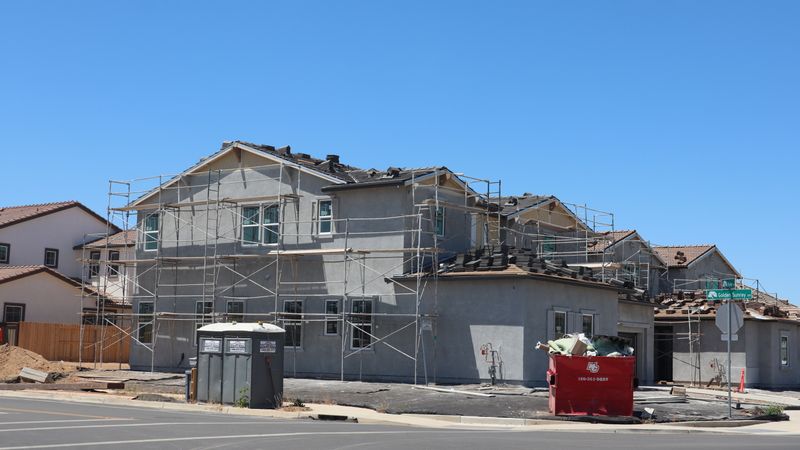
When material costs rise, builders face a specific math problem: can they build a home and sell it at a price the local buyer pool can afford? In many Sun Belt metros, the answer is still yes because land is cheaper and buyers have more price tolerance on new construction. In Seattle, the calculus is tighter. On a planned townhome project in Bothell or Lynnwood, a jump in material costs can mean the difference between a project that moves forward and one that waits indefinitely.
Northwest MLS reported that King County’s active listings were up 31.1% year over year in September. More homes for sale is not the same as more homes being built, though. Listings piling up on the market does not close the long-term supply gap that new construction was supposed to fill.
Snohomish County, which had seen more active new construction due to lower land costs in cities like Marysville, Monroe, and Lake Stevens, is showing similar pressure. Projects that penciled out at older material prices may need to be repriced or restructured at today’s costs.
What This Means for Buyers Counting on New Construction
If your plan was to wait for new homes to arrive and ease competition, a few things are worth reassessing:
New construction prices aren’t dropping to meet you. When input costs go up, builders protect their margins. The result isn’t cheaper new homes. It’s fewer of them, built at prices that still pencil out. Entry-level price points are where the supply gap will be most acute, because that’s where the margin squeeze hurts most.
The pipeline takes years to recover. Even if tariff policy reversed tomorrow, homes that were never started won’t suddenly appear; a new project takes a year or more from permit to move-in. Supply pipelines in housing are measured in years, not months. The construction slowdown from cost pressure compounds over time and doesn’t self-correct quickly.
Resale homes may be a better value than they look. A well-maintained resale home in Bothell, Shoreline, or Kirkland is competing with new construction that now costs more to build. Relative to what a comparable new home would price at, resale looks better than it did two years ago. A dated but sound house can be even better value, as explained in this guide to buying a cosmetic fixer-upper and building equity. This isn’t a reason to buy the wrong house, but it’s a reason not to dismiss resale options while waiting for new inventory that may be slower coming than expected.
King County specifically has a regulatory layer on top of this. Even before tariffs, new construction in King County carried a premium from permitting costs, impact fees, and development standards that don’t exist in the same form in neighboring counties. Tariffs compound on top of that base, not instead of it. Buyers who want new construction in King County proper should price the current reality carefully.
The Opportunity Inside the Constraint
There are buyers for whom new construction still makes a lot of sense, tariffs and all:
Buyers with specific accessibility or energy requirements that are hard to find in older resale stock often have to build or buy new. The cost is what it is, and it may still be the right call.
Buyers in further-out markets (Marysville, Arlington, Sedro-Woolley, outer Pierce County) where land costs are lower and builder margins have more cushion. New construction in these markets may be more viable than in the core urban area even with elevated material costs.
Buyers who identify a builder inventory home (a model or spec home the builder is motivated to sell quickly) can sometimes negotiate more aggressively than they could a year ago, because builders facing margin pressure want to turn over inventory and free up capital for the next project. The spec home sitting in phase two of a Snohomish County development may be more negotiable than an identical home was in 2022.
Buyers looking at large lot or semi-custom builds where the land value dominates the cost structure may be less exposed to material cost increases as a percentage of total project cost.
Builder Incentives: Where Buyers Have Leverage Right Now
Here is the part of the tariff story that gets less attention. Builders who started projects when materials were cheaper and rates were lower are now selling into a market where the 30-year mortgage rate has climbed back above 7%. Many would rather offer an incentive than cut the list price, because a lower list price resets the comparable sales for every other home in the community.
Common builder incentives include:
- Permanent rate buydowns, where the builder pays to lower your rate for the life of the loan.
- Temporary buydowns, such as a 2-1, where the rate starts lower and steps up over the first two years.
- Closing cost credits that cover some or all of your closing costs.
- Upgrade packages for appliances, flooring, or finishes.
- Price reductions on specific lots or spec homes that have been sitting.
A buydown can be worth more than a price cut. As an illustration: on a $700,000 loan, lowering the rate from 7.40% to 6.40% cuts the principal and interest payment by roughly $470 a month, which is more than $5,600 a year for as long as you keep the loan. For more on how these work, see my post on builder rate buydowns on Seattle new construction.
Questions to Ask a Builder Before You Sign
Builder contracts are written by the builder, and incentives come with fine print. Before you sign, ask:
- Does the incentive require the builder’s preferred lender? Many do. Get a competing quote from an outside lender so you can compare the full loan terms, not just the rate.
- What happens if costs change before completion? Find out whether your price is locked or whether the contract allows for escalation.
- What does the warranty cover, and for how long? Get the builder’s warranty in writing, and note which items are covered for one year, which for longer, and who handles claims.
- What are the HOA dues and reserves? Dues in a new community can start low and rise once the builder hands control to the owners. Ask for the budget and the reserve plan.
I cover more of these in the hidden concerns with buying new construction townhomes in Seattle.
The Bottom Line for Seattle Buyers
The new construction pipeline that was supposed to ease Greater Seattle’s supply crunch is under real pressure from material cost increases tied to tariff policy. The national projection of 450,000 fewer homes over the next several years is a big number that will be felt unevenly, and markets like Seattle, where supply was already tight and the cost of building was already high, will feel it more than average.
For buyers who were planning to wait for new construction to give them better options, the advice shifts: look at what’s available now, including the resale inventory that has grown significantly in King County and Snohomish County this year. The conditions that will make buying easier in 2027 or 2028 depend on assumptions about supply recovery that now have more uncertainty around them.
If you want to talk through where new construction makes sense in your search, or what your resale options look like in your target area and price range, I’m happy to spend some time on that. For more on what’s shaping Seattle inventory right now, see my posts on what’s really behind Seattle’s sales slowdown, what crossing one county line can save you, and my first-time buyer’s guide to Bothell.
Book a call with me here, or text HOME to 206-245-8813.
You can also grab my free Buyer’s Guide, including notes on new construction and move-in-ready resale homes in King and Snohomish County.
Frequently Asked Questions
How much do tariffs actually add to the cost of a new home?
The National Association of Home Builders (NAHB) tracks material cost impacts on residential construction. The total tariff impact on a new home depends on its size, location, and finishes, but the combination of lumber, steel, aluminum, and component tariffs has added meaningfully to per-home construction costs, enough that it changes the economics of whether to build certain projects. Entry-level and mid-range projects are most affected because there’s less margin to absorb cost increases.
Will new home prices come down when tariffs change?
Not necessarily, and not quickly. Construction cost increases tend to be stickier than commodity price decreases. Even if lumber prices dropped tomorrow, the homes that weren’t started in the past two years won’t appear on the market for at least another year or two. Supply pipelines are slow to build and slow to drain. A policy reversal would help the long-term outlook but wouldn’t produce near-term inventory relief.
Is there still new construction available in Greater Seattle right now?
Yes, builders are still active in parts of Snohomish County and outer King County where land costs allow projects to pencil out. Areas like Marysville, Lake Stevens, and communities along Highway 2 and Highway 9 continue to see new construction activity. In core King County cities (Seattle, Bellevue, Kirkland), new construction is mostly townhomes and condos rather than single-family, and the price points reflect the cost environment.
Should I give up on new construction and focus on resale?
Not necessarily, it depends on what you need. New construction has real advantages: warranty coverage, energy efficiency, modern layouts, and no deferred maintenance. But if you’re flexible on age of home, the current resale market in Greater Seattle has more inventory than it’s had in years, with sellers who are more negotiable than during the 2021-2022 peak. It’s worth looking at both with an open mind rather than committing to one category in advance.
How does this affect Seattle condo and townhome buyers specifically?
Condo and townhome construction in Seattle has always been expensive relative to single-family on a per-square-foot basis. Tariff-driven material cost increases make the economics of new urban infill projects harder, which means some planned projects may be delayed or scaled back. Buyers looking at new-construction condos or townhomes in Seattle proper should not assume the pipeline is as full as it was projected to be two or three years ago.
Go Deeper on This Topic

About the Author: Emily Cressey
Emily Cressey is a Seattle-area buyer’s agent and REALTOR® with HomePro Associates at Keller Williams Greater Seattle, specializing in relocation, first-time buyers, buy-sell transactions, downsizers, and new construction purchases across King and Snohomish Counties. A real estate investor since 2002 and a licensed broker since 2008, she grew up in Shoreline, WA and has guided buyers through every kind of market to help them find a home they love that will be a profitable long-term investment. Emily says, “My goal is to educate buyers so they make confident decisions.”
If you’re thinking about a move, reach out to Emily here. Call or text 206-245-8813 . We make real estate EASY for you.
WA Real Estate License #20109399 · Verify at WA DOL